

Plugging into a standard household wall outlet often leaves you waiting days just to recover a modest daily commute. Staring at an overnight range deficit creates real anxiety, especially when public fast charging stations rack up hefty fees during peak utility hours. Calculating the realistic cost of ev charging station at home means balancing hardware capabilities, dedicated circuit requirements, and electrical safety standards before buying equipment. A dedicated Level 2 home charger drastically cuts replenishment time, so you won’t have to stress about finding an open public plug before work.
Balancing portable flexibility and permanent wall power depends heavily on your existing garage breaker panel. While packing a reliable portable charger for car emergencies works great on road trips, a permanent high-amperage station delivers sustained speed for daily driving. Careful evaluation of product specifications and UL listings reveals that selecting the proper charging station amperage prevents nuisance breaker trips and keeps operating costs low. It’s always smart to weigh plug-in flexibility against hardwired power before making a final decision.

Pros
- Up to 3.5kW Level 2 charging significantly reduces charge time compared to Level 1 only units - great for RV park stops or home garages.
- Dual adapter system (NEMA 6-20 and 5-15) means you can charge from 240V or 120V outlets, offering flexibility whether at home, campground, or a friend's house.
- IP65 rated control box and premium materials give peace of mind for outdoor and travel use in rain, dust, or snow.
- 20-foot cable length is generous and reduces the need for extension cords, simplifying setup.
Cons
- Not compatible with Tesla vehicles without a separate J1772 adapter (not included), so Tesla owners may want to consider the VDLPOWERVP EC13/EC23 models instead.
- NEMA 6-20 plug requires a specific 240V outlet - many homes may have NEMA 14-50 or 6-50, so adapters might be needed for full Level 2 speed.
- Level 1 (120V) charging at 12A is relatively slow - fine for overnight top-offs but not ideal for quick charges on road trips.
The VDLPOWERVP EC10 is a portable Level 1 and Level 2 electric vehicle charger designed for EV owners who need a flexible, travel-friendly charging solution. This unit is particularly well-suited for RV owners, road trippers, homeowners wanting a backup charger, and emergency preppers who rely on their EV during power outages or off-grid stays. It also works great for tailgaters, van lifers, and anyone who regularly drives to campsites or remote work locations where charging infrastructure may be limited.
At the heart of the EC10 is a 16-amp, 3.5kW charging capability when used with the included NEMA 6-20 240V plug. This Level 2 charging rate is about four times faster than a typical Level 1 charger using a standard 120V household socket (which runs at 12A). For most EV owners, the Level 2 option means you can add around 12-15 miles of range per hour, allowing a full overnight charge for daily commutes or topping up at an RV park before hitting the road again. The included NEMA 5-15 adapter lets you plug into any standard US wall outlet for Level 1 charging, which is slower but perfect for use at home or when only a 120V outlet is available.
Build quality is a priority here. The control box is rated IP65 waterproof and dustproof, so it can handle rain, snow, or dusty campsites without issue. The unit also features intelligent chip-based protection against lightning, leakage, overcurrent, and short circuits, with real-time monitoring provided by LED indicator lights on the control box. The 20-foot cable is thick and flexible, giving you enough reach to navigate around obstacles in a garage, driveway, or campsite. The charger itself is lightweight at just under 6 pounds, making it easy to pack in your trunk or under the seat of your EV for on-the-go use.
Ease of use is straightforward: just plug the appropriate adapter into your outlet, connect the J1772 handle to your EV, and the charger starts automatically. The LED display shows power status, charging progress, and any error codes if something is wrong. For non-Tesla EVs like Chevrolet Bolt, Nissan Leaf, Ford Mustang Mach-E, Hyundai Ioniq 5, Kia EV6, and many others, it's plug-and-play. Tesla owners can use it with a third-party J1772 to Tesla adapter (not included), but the manufacturer recommends their EC13 or EC23 models specifically for Teslas. One limitation is that the NEMA 6-20 plug is less common than the standard NEMA 14-50 found in many newer homes and RV parks; you may need an adapter to use a 14-50 outlet at full Level 2 speed.
For storage, the charger comes with a carrying bag (based on typical product packaging) and can be coiled neatly in the included pouch or just tossed in a bag. It requires little maintenance other than keeping the connectors clean and dry. The unit is FCC certified, and the company offers a standard warranty (check listing for specifics). Overall, the VDLPOWERVP EC10 is a practical, budget-friendly portable EV charger that delivers solid performance for everyday home use, travel, and emergency backup. It's especially appealing for EV owners who camp frequently, live in apartments without a dedicated charger, or want a backup to keep in the car. If you need a reliable way to charge your J1772 EV at 240V on the road, this is a strong contender.
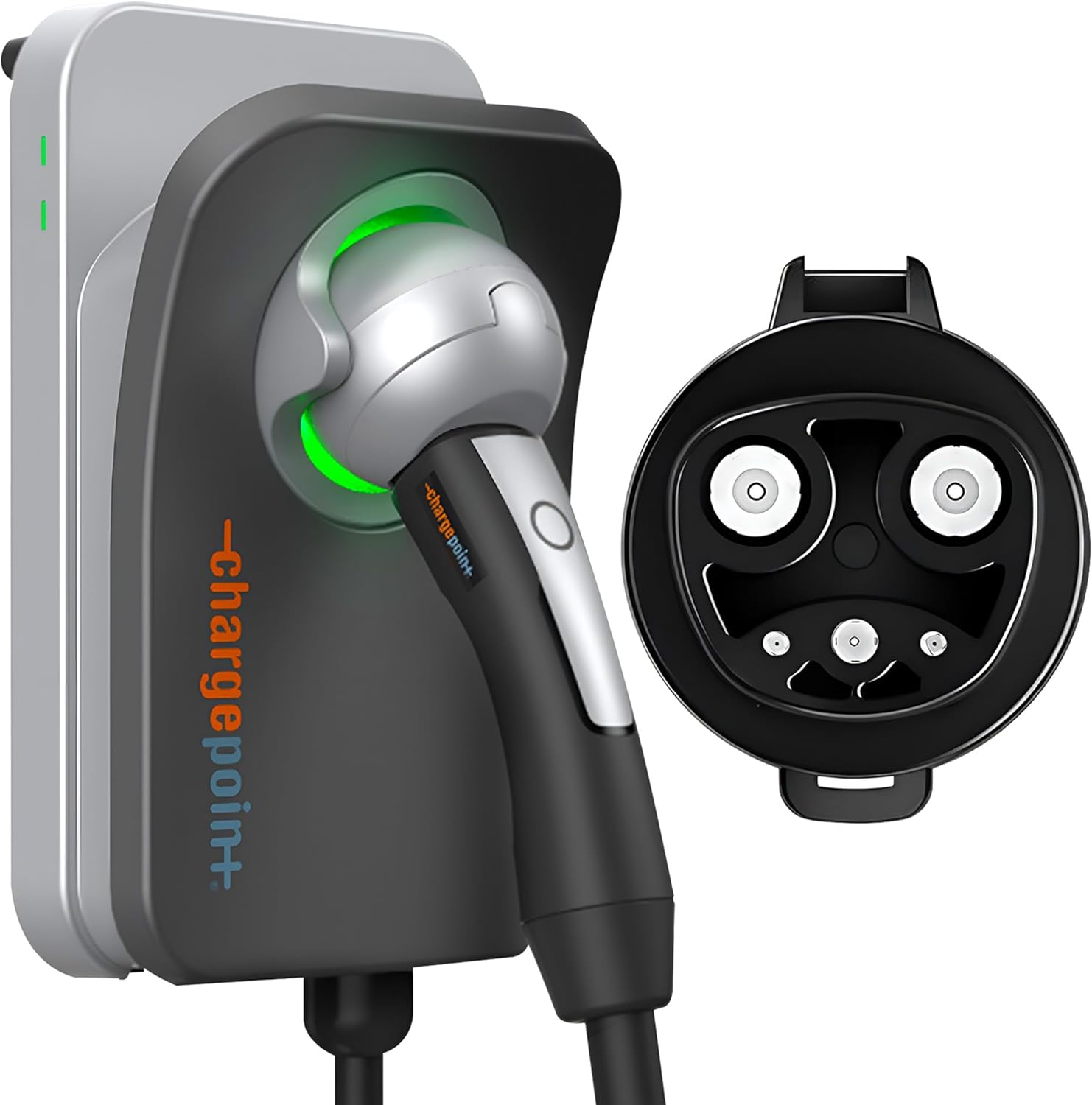
Pros
- Fast charging speeds up to 45 miles per hour, reducing downtime.
- Reliable app with scheduling, reminders, and remote monitoring features.
- Durable build with UL certification and cold-resistant cable for outdoor use.
- Compatible with Tesla and upcoming NACS EVs, ensuring future compatibility.
Cons
- Some users report WiFi connectivity issues that may require unit replacement.
- Customer service response times can be slow during peak demand periods.
- Hardwired installation requires a licensed electrician, adding upfront cost.
The ChargePoint HomeFlex Level 2 EV Charger is a hardwired charging station designed for home use, specifically compatible with Tesla vehicles and future NACS-equipped EVs. This smart charger is ideal for homeowners, remote workers, and anyone who wants a reliable, fast way to charge their electric vehicle overnight or during the day. It's not a portable unit, but it offers a permanent, high-power solution for daily EV charging needs.
When it comes to performance, the HomeFlex delivers up to 45 miles of range per hour on a 60-amp circuit, which is roughly 9 times faster than a standard 120V outlet. The included ChargePoint app allows you to monitor charging sessions, set schedules to take advantage of off-peak electricity rates, and locate nearby public stations via a network of over 274,000 locations across North America. Based on user feedback, the app is generally responsive and easy to use, though some have noted that remembering the LED status indicators can be tricky without a cheat sheet.
Build quality is a strong point here. The charger is UL-certified for safety and can be installed indoors or outdoors. The cable is cold-resistant, which is a plus for those in colder climates, and the unit itself feels sturdy. The hardwired version offers up to 50A output, providing the fastest possible home charging. Many users report that the charger works flawlessly for years, with one reviewer noting their previous ChargePoint unit lasted eight years before needing replacement.
Setup requires a licensed electrician for hardwiring, which adds to the initial cost but ensures a clean, permanent installation. After installation, the app guides you through connecting to Wi-Fi and creating an account. Most users find this process straightforward, but a notable minority have experienced Wi-Fi connectivity issues that led to multiple unit replacements and frustrating customer service experiences. This seems to affect a small percentage of units, but it's a risk to consider.
Realistic limitations include the potential for Wi-Fi problems, which can disable app features like scheduling and remote monitoring. Customer support, while available 24/7, has been criticized for long wait times and slow resolution during high-demand periods. Additionally, the hardwired design means you can't easily take it with you if you move, though it does add value to your home.
Overall, the ChargePoint HomeFlex is an excellent choice for Tesla owners or those planning to buy a NACS-compatible EV in the near future. Its fast charging, smart features, and durable build make it a reliable home charging solution. However, if you're concerned about potential Wi-Fi issues or want a more portable option, you might explore other brands. For most EV owners who want a set-and-forget charger, the HomeFlex delivers solid performance and peace of mind.
Frequently Asked Questions
What electrical factors impact the cost of ev charging station at home the most?
Circuit breaker capacity and installation method drive the largest portion of home charging expenses. Standard 240-volt setups requiring panel upgrades or long conduit runs increase total project costs beyond hardware. Choosing between a 16-amp portable unit like the Level 1&2 EV Charger, Electric Vehicle and a hardwired 48-amp station directly impacts your electrical requirements.
How does the 80 percent continuous load rule affect breaker sizing?
The National Electrical Code requires electric vehicle supply equipment to draw no more than 80 percent of a breaker’s rated capacity for continuous operation. Running a 16-amp continuous load safely requires a dedicated 20-amp circuit breaker. If you plan to draw 48 amps for faster Level 2 speeds, your electrical panel must support a dedicated 60-amp circuit with appropriate heavy-gauge wiring.
Can a NACS charging station charge vehicles with an SAE J1772 port?
Yes, you can charge an SAE J1772 vehicle using a NACS station by attaching a standard physical adapter. The ChargePoint HomeFlex Level 2 EV Charger comes equipped with a native NACS connector designed for Tesla vehicles, but mechanical adapters allow other electric cars to connect securely. Selecting hardware with the right native plug helps eliminate daily adapter clutter in your garage.
How do smart Wi-Fi scheduling features reduce ongoing charging costs?
Smart charging stations lower utility bills by automatically scheduling charging sessions during off-peak electricity hours. Many electric utilities offer time-of-use rate structures where kilowatt-hour rates drop late at night. Setting your charging schedule through mobile apps ensures your vehicle charges at the cheapest available rates without manual intervention.
What should you do if your EV 12-volt battery dies during home charging?
A dead 12-volt auxiliary battery prevents the vehicle from engaging its high-voltage contactors, stopping home charging completely. In sudden power drain situations, understanding how to charge a car battery without a charger can help you safely restore auxiliary system power. Once the low-voltage electronics wake up, your main charging station can resume replenishing the traction battery pack.
Are Level 2 charging stations eligible for local utility rebates in 2026?
Many electric utility providers offer substantial hardware and installation rebates for certified Level 2 charging stations in 2026. Hardware carrying recognized safety listings like UL certification or Energy Star qualification frequently qualifies for incentive credits. Checking local utility programs before purchasing helps lower the net cost of ev charging station at home substantially.


Write Your Review
No reviews yet. Be the first to share your experience!