

Evaluating Home Power Needs and Hardware Prices
Trickle charging from an ordinary wall outlet leaves electric vehicles starving for range after an entire night on the plug. Upgrading to a dedicated 240-volt Level 2 unit cuts recharge sessions from whole weekends down to just a few off-peak hours. Calculating your realistic target ev charging station cost requires weighing hardware specs, continuous amperage draw, and essential electrical safety certifications like UL or ETL listings. Hardwired units capable of pushing 48 amps deliver up to 11.5 kW of power, which keeps modern battery packs primed for daily commuting without wasting money at expensive public DC fast stations. Drivers who travel frequently often pair these home setups with a portable charger for car emergencies on the road.
Electrical service panels dictate the overall expense just as much as the wall connector hardware itself. A dedicated 60-amp circuit allows high-amperage equipment to run safely under the continuous load rules outlined by the National Electrical Code. Smart app features like scheduled charging take advantage of discounted nighttime utility rates, helping slash energy expenses month after month. Analyzing verified hardware specifications and manufacturer installation guidelines reveals reliable options that balance rugged weatherproofing with dependable everyday performance.

Pros
- Fast charging speed: 48A output delivers up to 46 miles of range per hour, among the fastest for home chargers.
- Excellent build quality: Heavy-duty, weatherproof enclosure with liquid-tight conduit and rubberized connector for long-term durability.
- Smart features: User-friendly app with scheduling, current adjustment, real-time monitoring, and OTA firmware updates.
- Easy installation: Hardwired design with clear instructions, mounting template, and theft-deterrent screws included.
- Great value: Competitive price point with high ratings and eligibility for federal tax credit and utility rebates.
Cons
- Hardwired installation requires a licensed electrician and a dedicated 60A circuit, which may add upfront cost.
- J1772 connector requires a separate adapter for Tesla vehicles (not included).
- App-based smart features rely on stable WiFi; some users may experience connectivity issues in basements or garages.
The EVIQO Level 2 EV Charger is a hardwired home charging station designed for EV and plug-in hybrid owners who want fast, reliable, and smart charging. This 48-amp unit delivers up to 11.5 kW, providing about 46 miles of range per hour – enough to fully recharge most EVs overnight. It's best suited for homeowners, RV owners who also drive electric vehicles, and anyone looking for a weatherproof, UL-certified charger that can be installed indoors or outdoors. The charger is also a great choice for emergency preppers who want to ensure their EV is always ready, and for remote workers who rely on their vehicle for daily commuting.
In real-world use, the EVIQO charger excels in both performance and convenience. The 25-foot charging cable offers plenty of reach for various parking configurations, and the heavy-duty J1772 connector with a metal latch feels secure and durable. The unit supports adjustable current from 6 to 48 amps, allowing you to match your home's electrical capacity. The smart app lets you set charging schedules, monitor energy consumption, and track costs – all helpful for managing electricity bills. The app also provides real-time voltage, current, and power readings, and you can adjust the amperage on the fly. The charger supports OTA firmware updates, which means it can improve over time.
Build quality is a standout feature. The enclosure is IP66 and NEMA 4 rated, meaning it's dust-tight and protected against heavy rain, snow, and even hose-directed water. The unit includes a steel shielding on the mainboard for added protection, and an external reset button clears faults without needing to open the charger. The high-visibility fluorescent holster makes it easy to find the connector in low light, and the theft-deterrent mounting screws add security for outdoor installations. The charger is also UL, ETL, FCC, and Energy Star certified, ensuring safety and efficiency.
Installation is straightforward for a licensed electrician: the hardwired design requires a dedicated 60-amp circuit, and the 40-inch input cable is designed for convenient conduit connection. The included mounting template and hardware make wall mounting simple. The charger is also eligible for the 30% federal tax credit and many local utility rebates, which can significantly reduce the net cost. The 3-year manufacturer warranty and responsive US-based customer support add to the value.
That said, there are a few limitations. Hardwired installation means you can't easily move the unit, and you'll need a professional electrician if you're not comfortable with electrical work. The J1772 connector is universal for all non-Tesla EVs, but Tesla owners will need to purchase a separate adapter. The app's smart features depend on a stable WiFi connection; some users in garages with weak signals may experience occasional drops. Overall, the EVIQO Level 2 EV Charger offers exceptional performance, build quality, and smart features at a competitive price. It's an excellent choice for any EV owner who wants a fast, reliable, and future-proof home charging solution.
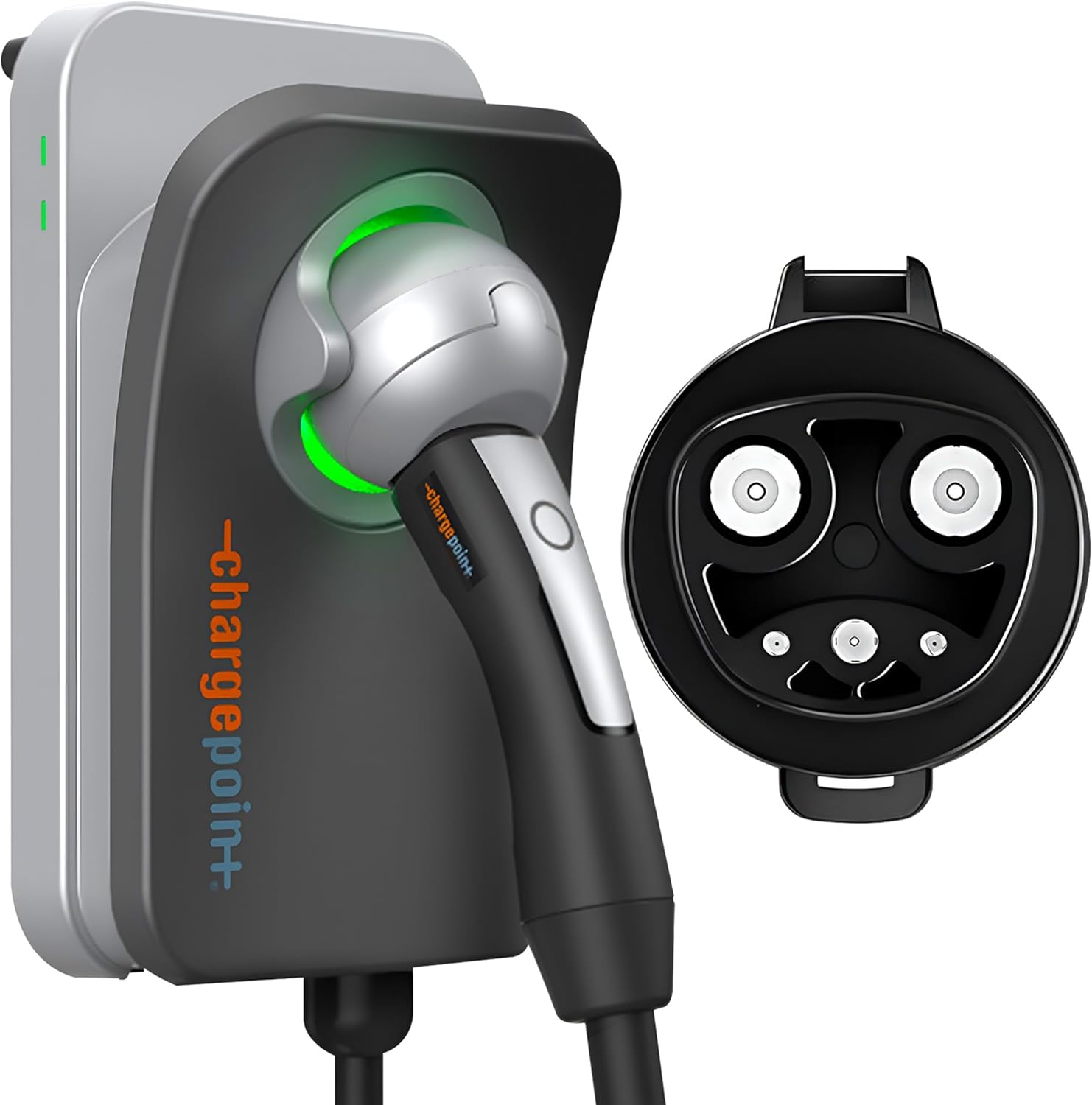
Pros
- Fast charging speeds up to 45 miles per hour, reducing downtime.
- Reliable app with scheduling, reminders, and remote monitoring features.
- Durable build with UL certification and cold-resistant cable for outdoor use.
- Compatible with Tesla and upcoming NACS EVs, ensuring future compatibility.
Cons
- Some users report WiFi connectivity issues that may require unit replacement.
- Customer service response times can be slow during peak demand periods.
- Hardwired installation requires a licensed electrician, adding upfront cost.
The ChargePoint HomeFlex Level 2 EV Charger is a hardwired charging station designed for home use, specifically compatible with Tesla vehicles and future NACS-equipped EVs. This smart charger is ideal for homeowners, remote workers, and anyone who wants a reliable, fast way to charge their electric vehicle overnight or during the day. It's not a portable unit, but it offers a permanent, high-power solution for daily EV charging needs.
When it comes to performance, the HomeFlex delivers up to 45 miles of range per hour on a 60-amp circuit, which is roughly 9 times faster than a standard 120V outlet. The included ChargePoint app allows you to monitor charging sessions, set schedules to take advantage of off-peak electricity rates, and locate nearby public stations via a network of over 274,000 locations across North America. Based on user feedback, the app is generally responsive and easy to use, though some have noted that remembering the LED status indicators can be tricky without a cheat sheet.
Build quality is a strong point here. The charger is UL-certified for safety and can be installed indoors or outdoors. The cable is cold-resistant, which is a plus for those in colder climates, and the unit itself feels sturdy. The hardwired version offers up to 50A output, providing the fastest possible home charging. Many users report that the charger works flawlessly for years, with one reviewer noting their previous ChargePoint unit lasted eight years before needing replacement.
Setup requires a licensed electrician for hardwiring, which adds to the initial cost but ensures a clean, permanent installation. After installation, the app guides you through connecting to Wi-Fi and creating an account. Most users find this process straightforward, but a notable minority have experienced Wi-Fi connectivity issues that led to multiple unit replacements and frustrating customer service experiences. This seems to affect a small percentage of units, but it's a risk to consider.
Realistic limitations include the potential for Wi-Fi problems, which can disable app features like scheduling and remote monitoring. Customer support, while available 24/7, has been criticized for long wait times and slow resolution during high-demand periods. Additionally, the hardwired design means you can't easily take it with you if you move, though it does add value to your home.
Overall, the ChargePoint HomeFlex is an excellent choice for Tesla owners or those planning to buy a NACS-compatible EV in the near future. Its fast charging, smart features, and durable build make it a reliable home charging solution. However, if you're concerned about potential Wi-Fi issues or want a more portable option, you might explore other brands. For most EV owners who want a set-and-forget charger, the HomeFlex delivers solid performance and peace of mind.
Frequently Asked Questions
What factors most influence the target ev charging station cost for home installation?
Equipment amperage and electrical panel capacity primarily establish the total investment. A hardwired 48-amp unit requires a dedicated 60-amp breaker and heavy-gauge copper wiring, which can raise installation bills if your main service panel is full. Selecting an Energy Star certified station helps offset these expenses through regional electric utility rebates.
Does a 48-amp hardwired station charge faster than a 40-amp plug-in unit?
Yes, a 48-amp hardwired unit delivers roughly 11.5 kW of power compared to 9.6 kW from a 40-amp plug-in setup. This difference yields around 45 to 46 miles of range per hour of charging, easily beating standard plug-in models. The hardwired configuration also eliminates the need for an industrial NEMA 14-50 outlet and a GFCI breaker that can occasionally nuisance trip.
Can non-Tesla Level 2 chargers work with Tesla vehicles?
Yes, SAE J1772 chargers connect to Tesla vehicles using a compact J1772-to-NACS adapter. Most Tesla vehicles ship with this adapter, or you can purchase an approved adapter separately. Alternatively, choosing a native NACS wall unit like the ChargePoint HomeFlex allows direct plug-in without secondary hardware.
How do smart app controls help reduce your ongoing charging expenses?
Scheduled off-peak charging automates energy consumption during nighttime hours when utility electricity rates drop to their lowest tiers. Mobile apps from brands like EVIQO and ChargePoint also track kilowatt-hour usage and display accurate energy costs right on your phone. These automated routines prevent your vehicle from pulling power during expensive peak grid demand windows.
Are Level 2 home charging units durable enough for outdoor winter installation?
Yes, stations carrying NEMA 4 or IP66 weatherproof enclosures withstand heavy rain, blowing snow, and freezing garage environments. High-grade enclosures protect internal electronics with steel shielding and weather seals. Cold-resistant 25-foot charging cables remain flexible in sub-zero weather, preventing stiff cord frustration on icy driveways.
What should you do if an EV battery completely dies before reaching a home charger?
Connecting to a roadside assistance mobile unit or public Level 2 terminal is the standard recovery protocol. While traditional vehicle owners might look into how to charge a car battery without a charger safely during 12-volt battery emergencies, high-voltage traction batteries strictly require certified EVSE hardware. Maintaining a dedicated Level 2 station at home prevents these unexpected depleted battery scenarios altogether.


Write Your Review
No reviews yet. Be the first to share your experience!