

Public fast charging fees add up quickly after a few road trips, pushing many electric vehicle drivers to look closely at daily energy expenses. Frequent commercial charging sessions expose commuters to rising tier rates and idle penalties, which naturally sparks interest in tracking your true electrify america charging station cost. Installing dedicated residential hardware like the EVIQO Level 2 EV Charger 40 Amp or keeping a flexible dual-voltage cord in your trunk helps dodge high on-peak utility expenses. For road trips or emergency top-offs, exploring a portable car charger provides peace of mind without reliance on busy highway plazas.
Home charging shifts your refueling routine to off-peak overnight hours, cutting energy costs substantially compared to public commercial stations. Reliable Level 2 hardware delivers stable 240-volt output with safety protections certified by UL or ETL, keeping your daily commute fully energized. Comparing long-term equipment value against commercial network fees shows that residential EVSE setups pay for themselves while keeping your battery safely balanced.

Pros
- Fast Level 2 charging significantly reduces charge time compared to standard Level 1 chargers.
- Long 26ft cable offers flexible placement and convenience when outlets are far from your vehicle.
- Dual plug adapters provide versatility for charging at home, RV parks, or public stations.
- Clear LCD display allows you to monitor charging progress and power details at a glance.
- Robust safety protections (leakage, overcharge, undervoltage) help ensure reliable operation.
Cons
- Only includes NEMA 14-50 and 5-15 adapters; other plug types (e.g., NEMA 6-20) may require separate adapters.
- Lacks smart app connectivity or scheduling features found on some premium chargers.
- Some users may prefer a hardwired installation for permanent home use rather than a portable unit.
The Junsun Portable EV Charger is a versatile Level 1 and Level 2 charging solution designed for electric vehicle owners who need flexibility at home or on the road. It's especially well-suited for RV owners who can take advantage of 50-amp campground hookups, road trippers who want to top off at various locations, and homeowners looking for a reliable charger without permanent installation. This charger also appeals to emergency preppers who want a backup charging option during power outages or travel disruptions.
In terms of performance, the Level 2 mode using the NEMA 14-50 plug delivers up to 32 amps at 240 volts (7.68kW), adding about 24 miles of range per hour for most EVs. That's roughly six times faster than a typical Level 1 charger. The included NEMA 5-15 adapter allows Level 1 charging at 16 amps and 110 volts (1.7kW) when only a standard household outlet is available. The adjustable current setting (16 or 32 amps) lets you match the charger to your circuit's capacity, which is useful for older wiring or when using a shared outlet. The 26-foot cable provides ample reach to connect to outlets in garages, driveways, or campsites without moving the vehicle.
Build quality appears solid based on product specifications. The cable uses 100% copper wire with a thick TPE flame-retardant outer jacket, and the control box is waterproof and dustproof. The LCD screen displays real-time current, voltage, charging amount, and elapsed time, giving you full visibility into the charging process. Safety is prioritized with leakage protection, overcharge protection, and under voltage protection, plus an LED indicator on the control box that alerts you to any issues. These features help ensure safe operation in various environments, from wet outdoor conditions to dry garages.
Ease of use is a strong point: simply plug into the appropriate outlet, connect the SAE-J1772 connector to your EV, and charging begins automatically. No complex setup or installation is required. The portable design means you can store the charger in your trunk or garage and take it on road trips, to RV parks, or to visit family. One limitation is that only two plug adapters are included; if you need a NEMA 6-20 or TT-30 for certain RV parks, you'll need to purchase an additional adapter. Also, there's no app connectivity or scheduling, which some users might miss for optimizing off-peak charging times.
Overall, the Junsun Portable EV Charger offers excellent value for EV owners who want a fast, portable charging solution without the cost of a hardwired station. It's perfect for RV boondocking, cross-country road trips, or as a reliable backup at home. If you need a versatile charger that covers both Level 1 and Level 2 needs with a long cable and solid safety features, this model is a practical choice. Just be aware of its limited plug compatibility and lack of smart features before purchasing.

Pros
- Blazing fast charging speed (38 miles per hour) reduces wait time at home
- Smart scheduling and energy tracking via the EVIQO app helps lower electric bills
- Heavy-duty build with long cable reaches even awkward parking spots
- Easy DIY installation if you already have a NEMA 14-50 outlet; certified for safety and rebates
- Compatible with nearly every EV and PHEV on the market today
Cons
- Requires a 240V NEMA 14-50 outlet (40-50 amp circuit); not portable for travel
- Smart features depend on a stable 2.4 GHz Wi-Fi connection; may have issues in garages with poor signal
- Tesla owners need a separate NACS adapter for direct plug-in (not included)
The EVIQO Level 2 EV Charger is a smart, high-power home charging station designed for electric vehicle owners who want to skip the slow trickle of a standard wall outlet. This plug-in unit delivers 40 amps (9.6 kW) over a 240-volt circuit, adding up to 38 miles of range per hour — roughly eight times faster than a basic portable charger. It's a permanent or semi-permanent addition to your garage or driveway, perfect for homeowners who drive EVs daily and want to top off overnight or before a weekend road trip.
This charger is best suited for homeowners with EVs or plug-in hybrids, especially those who commute long distances, have multiple electric cars, or want to take advantage of off-peak electricity rates. It also works well for RV owners with electric RVs (like the Rivian or Ford F-150 Lightning used for towing), and for remote workers who need a guaranteed full charge each morning. While not portable in the traditional sense, the EVIQO can be unplugged and moved if you relocate, as long as a NEMA 14-50 outlet is available.
In terms of performance, the 9.6 kW output is robust enough to handle large EV batteries. For example, a 75 kWh battery can be fully recharged from near-empty in just over 7 hours — great for overnight charging. The charger features adjustable current from 6 to 40 amps (in 1-amp steps), so you can dial it down if your home's electrical system or breaker is shared with other appliances. The 25-foot output cable is one of the longest on the market, giving you the flexibility to park on either side of a two-car garage. The input cable is also longer than average at 37 inches, which helps reach outlets mounted high on the wall. The smart Wi-Fi antenna is enhanced to maintain a solid connection even in garages or basements, and the app lets you set schedules, monitor energy consumption and cost, and receive charging reminders. Over-the-air firmware updates keep the unit current without any manual intervention.
Build quality is a standout feature. The charger carries UL, ETL, FCC, and Energy Star certifications, which not only ensure safety but also make it eligible for a 30% federal tax credit and many local utility rebates. The housing is rated NEMA 4 and IP66, meaning it can handle rain, snow, sleet, heat, and dust — so it's fine to mount outdoors as long as it's not submerged. The mainboard is shielded with steel to protect against electromagnetic interference and physical impact, and an external reset button lets you clear faults quickly without opening the unit. The J1772 connector is fully rubberized with a metal tab for durability, and the entire unit has passed cold weather tests, drop tests, and cable deep freeze tests, according to the manufacturer. The 3-year warranty and US-based customer support add peace of mind.
Installation is straightforward if you already have a NEMA 14-50 outlet (common for electric ranges or RV parks). Simply hang the included wall bracket, plug in the charger, and download the app. If you don't have an outlet, you'll need an electrician to run a 240V circuit — but that's a one-time cost. One realistic limitation is that the smart features rely on a stable 2.4 GHz Wi-Fi connection; if your garage has weak signal, you may need a Wi-Fi extender. Also, Tesla owners will need to purchase a separate NACS adapter (sold separately). The charger itself is not lightweight at 20.3 pounds, but it's meant to stay mounted. For those who move frequently, the plug-in design makes it semi-portable, but you wouldn't want to toss it in a trunk for trips.
Overall, the EVIQO Level 2 EV Charger offers an excellent combination of speed, smart features, and rugged build quality at a competitive price point. It's ideal for any EV owner who wants to reduce charging time at home, save money by scheduling off-peak fills, and have a reliable unit that will last for years. Whether you drive a Chevy Bolt, Ford Mustang Mach-E, Hyundai Ioniq 5, VW ID.4, or a Nissan Leaf, this charger will suit your needs. If you're a homeowner preparing for an electric future or already driving an EV, this is a solid investment in convenience and energy savings.
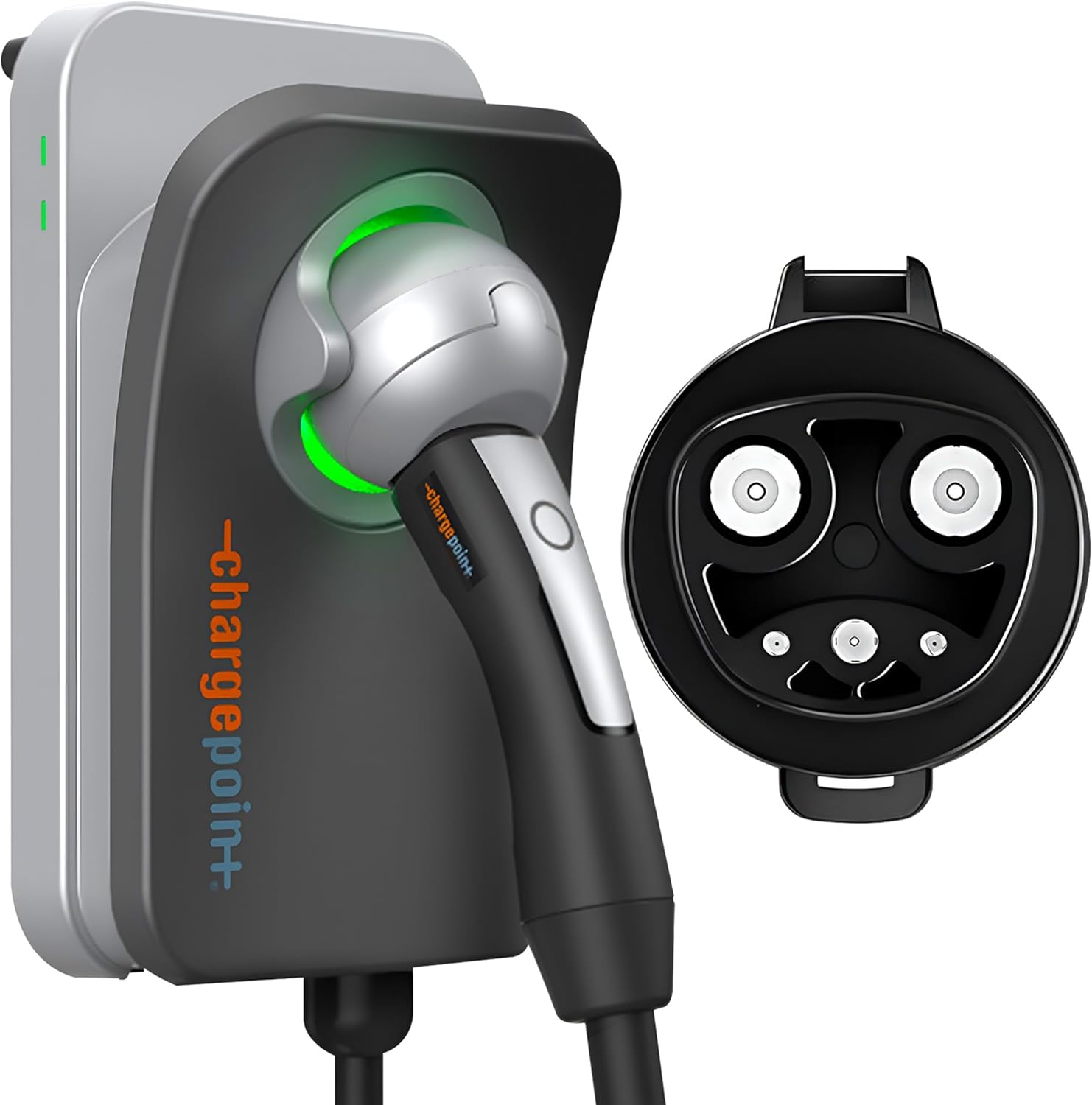
Pros
- Fast charging speeds up to 45 miles per hour, reducing downtime.
- Reliable app with scheduling, reminders, and remote monitoring features.
- Durable build with UL certification and cold-resistant cable for outdoor use.
- Compatible with Tesla and upcoming NACS EVs, ensuring future compatibility.
Cons
- Some users report WiFi connectivity issues that may require unit replacement.
- Customer service response times can be slow during peak demand periods.
- Hardwired installation requires a licensed electrician, adding upfront cost.
The ChargePoint HomeFlex Level 2 EV Charger is a hardwired charging station designed for home use, specifically compatible with Tesla vehicles and future NACS-equipped EVs. This smart charger is ideal for homeowners, remote workers, and anyone who wants a reliable, fast way to charge their electric vehicle overnight or during the day. It's not a portable unit, but it offers a permanent, high-power solution for daily EV charging needs.
When it comes to performance, the HomeFlex delivers up to 45 miles of range per hour on a 60-amp circuit, which is roughly 9 times faster than a standard 120V outlet. The included ChargePoint app allows you to monitor charging sessions, set schedules to take advantage of off-peak electricity rates, and locate nearby public stations via a network of over 274,000 locations across North America. Based on user feedback, the app is generally responsive and easy to use, though some have noted that remembering the LED status indicators can be tricky without a cheat sheet.
Build quality is a strong point here. The charger is UL-certified for safety and can be installed indoors or outdoors. The cable is cold-resistant, which is a plus for those in colder climates, and the unit itself feels sturdy. The hardwired version offers up to 50A output, providing the fastest possible home charging. Many users report that the charger works flawlessly for years, with one reviewer noting their previous ChargePoint unit lasted eight years before needing replacement.
Setup requires a licensed electrician for hardwiring, which adds to the initial cost but ensures a clean, permanent installation. After installation, the app guides you through connecting to Wi-Fi and creating an account. Most users find this process straightforward, but a notable minority have experienced Wi-Fi connectivity issues that led to multiple unit replacements and frustrating customer service experiences. This seems to affect a small percentage of units, but it's a risk to consider.
Realistic limitations include the potential for Wi-Fi problems, which can disable app features like scheduling and remote monitoring. Customer support, while available 24/7, has been criticized for long wait times and slow resolution during high-demand periods. Additionally, the hardwired design means you can't easily take it with you if you move, though it does add value to your home.
Overall, the ChargePoint HomeFlex is an excellent choice for Tesla owners or those planning to buy a NACS-compatible EV in the near future. Its fast charging, smart features, and durable build make it a reliable home charging solution. However, if you're concerned about potential Wi-Fi issues or want a more portable option, you might explore other brands. For most EV owners who want a set-and-forget charger, the HomeFlex delivers solid performance and peace of mind.
Frequently Asked Questions
How does home Level 2 charging compare to public electrify america charging station cost?
Home charging is generally far less expensive per kilowatt-hour than public commercial charging networks. Commercial fast charging stations charge premium rates to cover high-output DC equipment, demand charges, and site operations. In contrast, residential Level 2 units like the EVIQO Level 2 EV Charger 40 Amp utilize residential utility rates, which drop even further when programmed for overnight off-peak hours.
Can scheduling your EV charger reduce overall energy expenses?
Yes, scheduled charging significantly lowers utility bills by taking advantage of time-of-use electric rates. Many electric utilities offer lower kilowatt-hour rates late at night when overall grid demand declines. Smart EVSE units allow drivers to program charging windows directly through mobile apps, avoiding pricey peak-hour rates automatically.
What circuit breaker size is needed for a 40-amp home EV charger?
A 50-amp dedicated circuit breaker is required for a continuous 40-amp charging load. Under standard electrical safety guidelines, EV chargers operate continuously, which restricts current draw to 80 percent of the total circuit breaker rating. Installing proper wire gauges and matching breakers prevents nuisance tripping and protects household electrical panels.
Does a portable dual-voltage charger eliminate the need for fixed public charging?
Portable chargers offer immense flexibility for daily replenishment and travel, reducing dependence on public infrastructure. Units like the Junsun Portable Level 1 and Level 2 EV Charger switch between standard 120V household outlets and 240V NEMA 14-50 receptacles. This versatility allows drivers to plug in at campsites, rental homes, or work locations without paying recurring network subscription fees.
How can you safely handle a completely drained battery without an accessible charging station?
Drained vehicles require alternative power sources or roadside assistance rather than makeshift electrical connections. Reviewing safe procedures on how to charge a car battery safely outlines proper handling for auxiliary 12V systems when high-voltage systems fail to wake up. Maintaining access to compatible Level 1 emergency cables prevents unexpected stranding in remote corridors.


Write Your Review
No reviews yet. Be the first to share your experience!