

Low battery warnings always seem to flash right when boarding a cross-country flight or navigating an unfamiliar city street. Scrambling to spot an open airport wall outlet is never fun, especially when your plane is boarding in ten minutes. Modern smartphones demand serious juice, but carrying a heavy, slow-charging brick in your jacket pocket creates its own set of headaches. That is why this cell phone portable power bank buying guide focuses on practical wattage, packable dimensions, and dependable backup power. Picking the right balance of ports and speeds keeps your devices running smoothly without unnecessary bulk.
Evaluating battery packs requires looking past basic marketing claims on the box. Our breakdown weighs key technical specs like USB-C Power Delivery, actual watt-hour capacities, and integrated cable designs across trusted hardware. Pairing the right gear also means knowing how many volts in a phone charger setup you need for rapid device replenishment. If you fly frequently, picking a dedicated portable charger for travel ensures your phone stays powered while complying with strict airline cabin rules.
[acms_list asin=”B0DGGHTJQB,B0FDKH3DPP,B0CXDXP8VR,B0G1X9H4QN,B0CJFMNKBV”]
Frequently Asked Questions
Can you take a 20,000mAh portable charger on an airplane?
Yes, almost all 20,000mAh portable power banks are fully permitted in carry-on bags under TSA airline rules. A standard 20,000mAh lithium-ion battery operates at 3.7 volts, equaling roughly 74 watt-hours (Wh), which sits well below the standard TSA 100Wh limit. Airline security regulations require you to keep these battery packs inside your carry-on luggage rather than checked bags.
What is the ideal battery capacity to look for in a %keyword% in %year%?
A 10,000mAh capacity provides the best balance of pocketable portability and charging efficiency for daily smartphone use. This size typically recharges an average phone between 1.5 and 2 full cycles while maintaining a compact weight under 9 ounces. If you need multi-day off-grid power or plan to charge tablets alongside phones, stepping up to a 20,000mAh pack is worthwhile.
Can a phone power bank also recharge a laptop?
Yes, but only if the power bank provides at least 45W to 65W output via USB-C Power Delivery. Standard compact chargers supplying only 15W to 20W might charge a smartphone quickly, but they will barely maintain a laptop battery during active use. High-wattage models supply enough dedicated output to recharge a MacBook Air or compatible PC laptop efficiently.
How does pass-through charging work on portable battery packs?
Pass-through charging allows the battery bank to recharge itself from a wall outlet while simultaneously supplying power to connected devices. This feature reduces cable clutter in hotel rooms because a single wall adapter can top off both the power pack and your phone overnight. Keep in mind that heavy pass-through charging generates extra heat, making built-in thermal protection essential.
Does wireless magnetic charging work as quickly as wired USB-C?
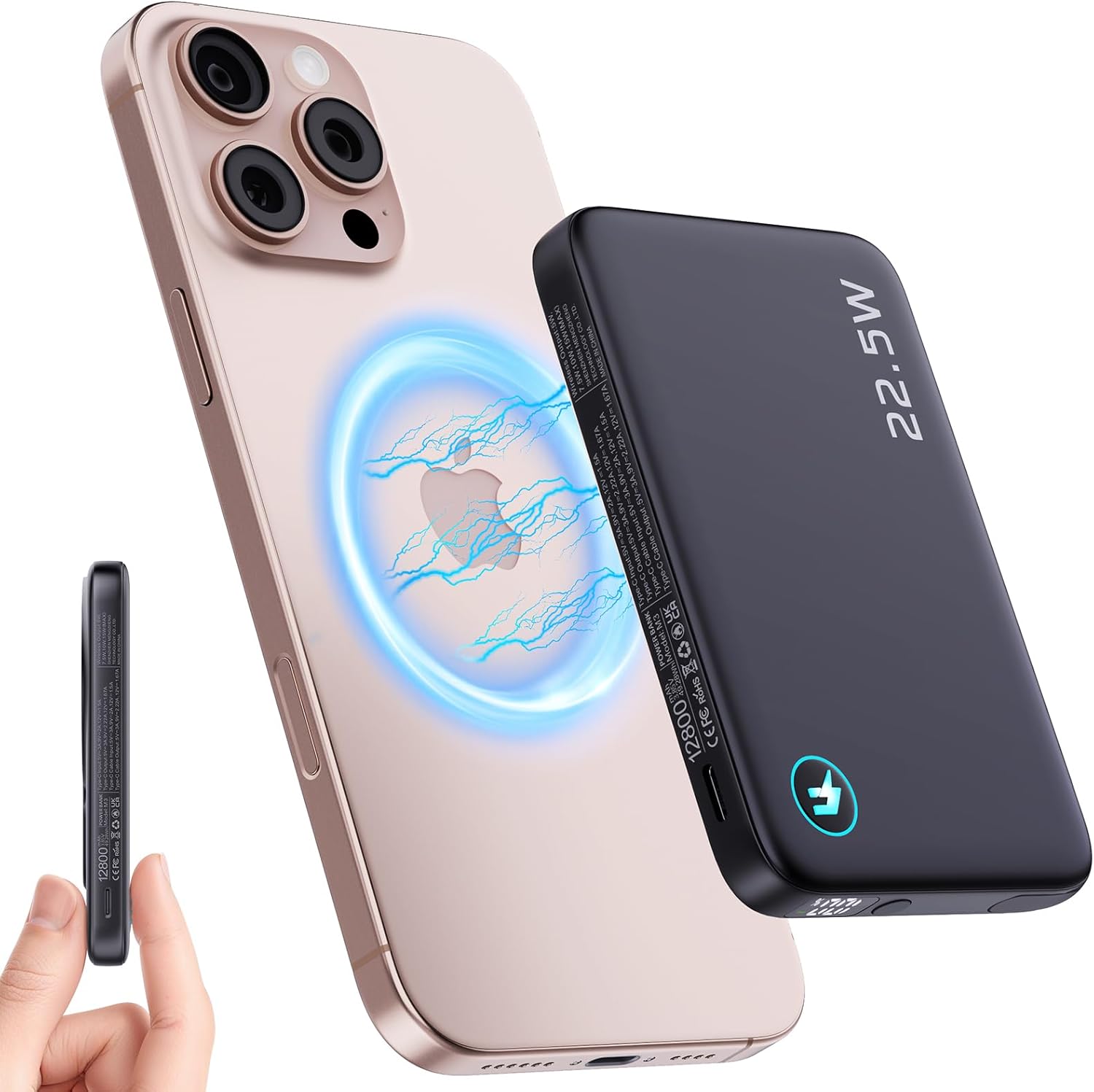
No, wired USB-C connections consistently charge faster and generate far less heat than wireless alternatives. While pairing a magnetic portable charger for Android or iPhone offers convenient cord-free attachment, magnetic output is capped around 7.5W to 15W. Plugging directly into a USB-C port delivers speeds up to 22.5W or 45W, cutting your recharge time in half.
Will fast portable chargers damage small devices like wireless earbuds?
No, quality portable chargers automatically regulate voltage and amperage to protect low-draw electronics. Smart chips detect whether a device needs high-speed Power Delivery or a low-amperage trickle charge. If you use older accessories or portable chargers for iPhone gear, the internal control circuit prevents overcharging, short circuits, and voltage spikes.



Write Your Review
No reviews yet. Be the first to share your experience!