

Dead phone screens miles from the trailhead create serious navigational headaches, especially when paper topo maps stay tucked at the bottom of your pack. Backpackers rely on GPS tracking, satellite communicators, and emergency beacon apps to navigate remote backcountry loops safely. Carrying heavy battery bricks can weigh down an ultralight setup, while weak solar gadgets often stop charging the second a passing cloud drifts overhead. Selecting the best lightweight solar charger for backpacking ensures you harness direct sunlight without burdening your pack with excess ounces. Whether you prioritize a foldable multi-panel array or a compact backup bank, dependable off-grid electricity keeps essential trail tools running through unexpected weather delays.
Based on manufacturer specifications and real-world hiker feedback, modern solar gear balances high conversion efficiency with rugged weather resistance. High-efficiency monocrystalline cells and durable ETFE surface laminates now deliver steady current even in changing mountain conditions. Many hikers combine a compact solar kit with a versatile portable charger for travel to buffer power during overcast afternoons. Understanding port configurations, auto-restart capabilities, and true charging wattage helps you pick a setup that handles dirt, sudden rain showers, and long trail days without failing when you need emergency communication most.

Pros
- Ultra-light and compact design for easy portability on hikes or in go-bags
- Fast charging with both USB-A QC3.0 and USB-C PD for modern devices
- Durable IP67 construction resists rain, dust, and scratches for long outdoor life
Cons
- Requires direct sunlight for best performance; partial shade can reduce output significantly
- No built-in battery storage so it only works when the sun is shining
- DC port output limited to 40W max combined; charging two devices may slow each port
The FlexSolar 40W Foldable Solar Panel is a practical solar charger designed for outdoor enthusiasts who need to keep small electronics powered while away from wall outlets. It is a portable solar panel that converts sunlight into electricity, making it ideal for campers, hikers, backpackers, and emergency preppers who want to stay connected or keep devices running during off-grid adventures or power outages.
This panel is best suited for people who value lightweight gear and dependable charging on the move. At just 1.76 pounds and folding down to roughly the size of a small laptop, it slips easily into a backpack or emergency kit. With dual fast-charging outputs — a QC3.0 USB-A and a PD2.0 USB-C port, each capable of up to 18 watts — it can charge smartphones, tablets, power banks, and even some small GPS devices simultaneously. The 19V DC port adds versatility for powering compatible small solar generators directly.
According to product specs and user feedback, the monocrystalline cells achieve a 24% conversion efficiency, which is above average for panels in this class. That means it can charge a typical smartphone in a couple of hours under good sunlight. However, like all solar chargers, performance dips significantly in shade or cloudy conditions, so positioning is key. The included carabiners make it easy to attach to a tent, backpack, or tree. The IP67 waterproof rating and ETFE coating add peace of mind against rain, dust, and scratches during rugged use, though the junction box should be kept from heavy downpours.
Build quality feels solid for a foldable panel, with a durable fabric exterior and sturdy solar cells that resist wear. The smart IC chip automatically detects connected devices to optimize charging, and safety protections prevent overcurrent, overheating, and short circuits. There's no battery storage, so it works only when the sun shines, but it pairs well with a power bank for storing energy to use later. Some users note that charging one device at a time yields faster speeds than splitting power between two, which is a practical tip for efficient use.
While it's not meant to run large appliances or power a house, this panel excels at maintaining essential electronics for weekend campers, day hikers, or anyone building a lightweight emergency preparedness kit. Its portability and dependable solar conversion make it a smart choice for those who need a reliable trickle charger for phones, GPS units, or small power banks without adding much weight or bulk. For RV owners or van lifers who have more space and higher power needs, a larger panel might be more appropriate, but for backpacking or grab-and-go emergency use, the FlexSolar 40W is a well-rounded and practical solution.

Pros
- Lightweight and compact design makes it easy to carry on any outdoor adventure or store in an emergency bag.
- Multiple output ports (dual USB-C and USB-A) let you charge different devices at once, increasing efficiency.
- High solar conversion efficiency (25.4%) means you get more power from available sunlight compared to many competitors.
- Durable build with IP44 waterproof rating and polymer surface withstands outdoor elements and daily wear.
Cons
- Does not have a built-in battery, so it only charges devices when in direct sunlight and cannot store power for later use.
- Charging speed depends heavily on sunlight intensity and angle; performance drops significantly in cloudy or shaded conditions.
- Output limited to 5V/3A per port (12W max per port), which may be slow for larger power banks or devices that support faster charging.
The BigBlue 28W Solar Panel Charger is a portable solar charger designed to keep your essential electronics powered up when you are away from traditional outlets. It is best suited for campers, hikers, backpackers, RV owners, emergency preppers, outdoor enthusiasts, road trippers, van lifers, tailgaters, and anyone who spends time off-grid or wants a reliable backup power source for emergencies. This charger is also a practical gift for travelers, students, parents on-the-go, and homeowners preparing for power outages.
In real-world use, this solar panel delivers up to 28 watts of power from its high-efficiency solar cells, which convert 25.4% of sunlight into usable electricity. It features two USB-C ports and one USB-A port, each capable of outputting up to 5V/3A (12W), allowing you to charge multiple devices simultaneously like smartphones, power banks, GPS units, and headlamps. Keep in mind that actual charging speed depends on sunlight conditions; direct, bright sunlight yields the best results, while overcast skies or partial shade will slow charging significantly. The panel does not have a built-in battery, so it must be connected to your device while in the sun to charge.
Build quality is solid for a portable solar panel. The panels are made with advanced N-type solar cells and a shadow-free surface design that minimizes power loss from metal lines. The unit is rated IP44 waterproof, meaning it can withstand splashes and light rain, though the USB junction box is not fully waterproof and should be protected from direct water exposure. The foldable design is convenient: it folds to 11.1 x 6.3 x 1.34 inches and weighs just 1.48 pounds, making it easy to slip into a backpack or emergency kit. Four carabiners are included for attaching it to a backpack, tent, or other gear.
Ease of use is straightforward: simply unfold the panel in direct sunlight, connect your device via USB, and charging begins automatically. There are no buttons to press, and a blue LED light glows solid when charging properly. For best performance, keep the panel clean and free of shadows, and avoid using it behind glass windows, which can block up to 25% of sunlight. Some users find that propping the panel up with a stick or gear helps maintain an optimal angle toward the sun. The panel works well with power banks that draw low current, but some larger power banks may require a minimum current that the panel might not always provide under weaker sunlight.
One realistic limitation is that the charger relies entirely on sunlight; it cannot charge at night or in very low light. Also, each USB port is limited to 12W, which is fine for phones and small devices but may be slow for larger power banks or tablets. The panel's output is also affected by temperature, angle, and shadows, so patience is required. For longer trips, many users pair this panel with a power bank to store energy during the day and charge devices later. The included USB-C to USB-C cable is a nice addition, but Apple device owners will need their own Lightning cable.
Overall, the BigBlue 28W Solar Panel Charger is a reliable and portable solution for keeping small electronics charged during outdoor adventures or emergencies. It is not a fast charger, but it offers dependable off-grid power when you need it most. For campers, hikers, and preppers who want a lightweight, durable solar charger that can handle multiple devices, this is a solid choice that delivers good value for the price.

Pros
- Wireless charging works with most phones and AirPods, adding convenience.
- 20W fast charging via USB-C quickly tops up devices.
- Dual LED flashlight is bright and includes SOS mode for emergencies.
- Rugged build with IPX5 waterproof rating and shockproof design.
- Compact and lightweight for easy portability on hikes or in a bag.
Cons
- Solar charging is very slow; it's best used as a backup, not a primary charging method.
- 10,000mAh capacity may not be enough for multiple device charges on longer trips.
- Wireless charging pad placement can be finicky and requires precise alignment.
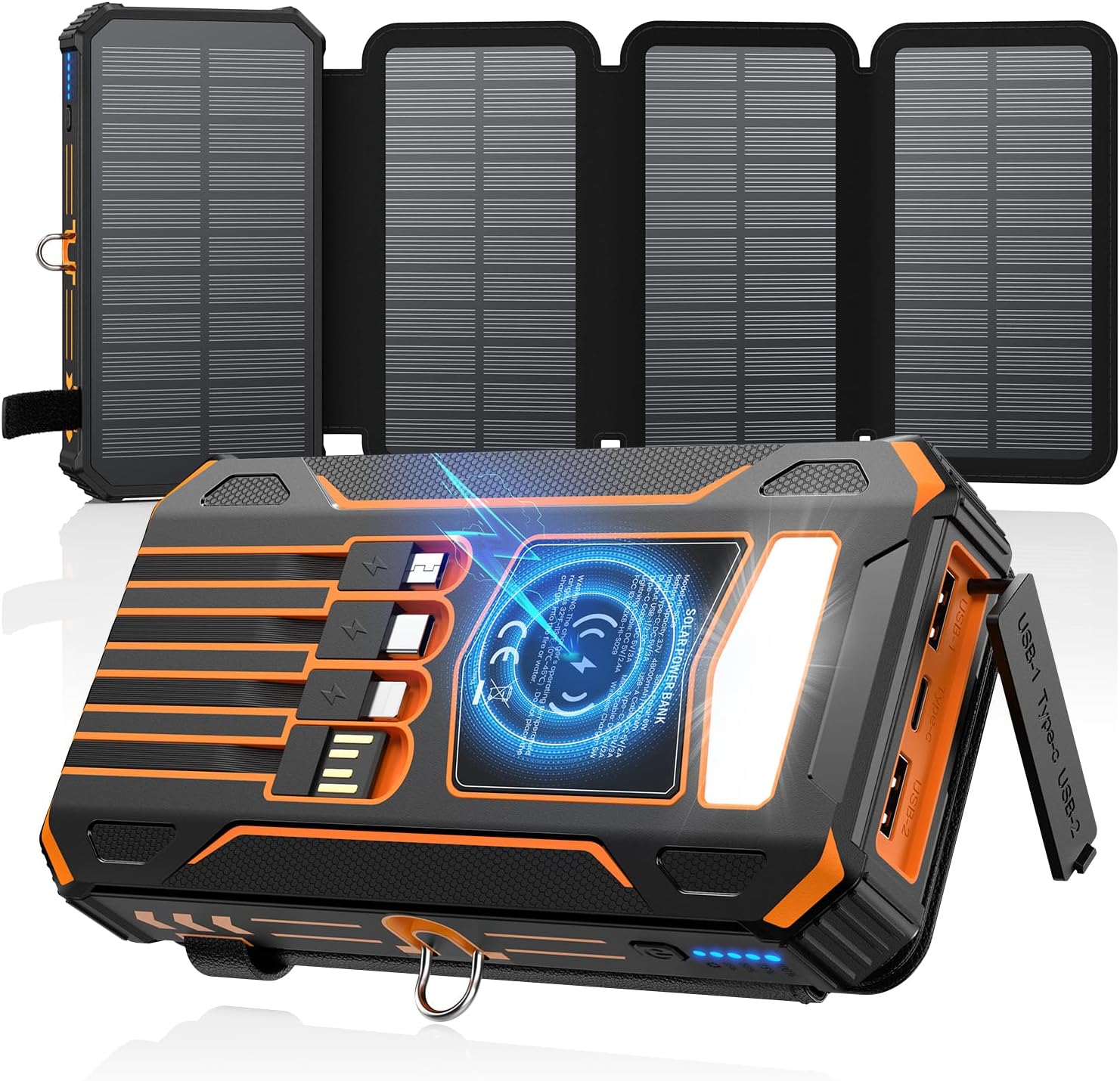
The BLAVOR Solar Power Bank is a versatile portable charger designed for outdoor enthusiasts, campers, hikers, and anyone who needs reliable backup power away from wall outlets. With a 10,000mAh capacity, it offers enough juice to charge a typical smartphone two to three times, making it suitable for weekend camping trips, day hikes, or emergency preparedness kits. Its standout features include built-in wireless charging up to 10W and a 20W USB-C fast charging port, which can bring an iPhone 15 to 65% in just 30 minutes according to the manufacturer.
In terms of battery performance, the real-rated capacity ensures you get the full 10,000mAh, and the power bank holds its charge well over time. The 20W USB-C output is a major plus for fast charging recent smartphones and tablets. The wireless charging pad works with most Qi-compatible devices, including AirPods, though placement requires a bit of care. The integrated solar panel is a nice backup, but it's slow (max 0.23A) and best used to trickle charge the bank over a full day in direct sunlight. Most users will rely on the included USB-C cable for primary charging.
Build quality is a highlight. The outer shell uses flame-retardant ABS and PC materials, with a rubberized skin-feel coating that provides a comfortable grip. It's rated IPX5 waterproof, meaning it can handle rain, splashes, and dusty conditions without issue. The dual LED flashlight is surprisingly bright and features a steady mode and SOS flashing, which is handy for tent setup, night walks, or signaling. A built-in compass carabiner adds extra utility for clipping to a backpack or belt loop.
Portability is excellent: the unit weighs just 9.3 ounces and measures 5.9 x 3.1 x 0.8 inches, easily slipping into a pocket or small pouch. The four LED battery indicators give a clear readout of remaining charge. Operation is simple: press the power button to check battery level or start charging. The power bank is also airline approved, so you can bring it on flights without hassle.
Realistically, the solar charging is not a primary power source; it's a useful emergency trickle. The 10,000mAh capacity is adequate for a day or two of moderate use, but heavy users may want a larger capacity. The wireless charging pad works well but can be a bit finicky with phone cases. Overall, the BLAVOR power bank is a well-rounded, affordable option for campers, hikers, and anyone building a go-bag for emergencies.
For its price, this power bank offers great value. It's a practical gift for outdoor lovers, a reliable companion for short trips, and a solid addition to any emergency kit. If you need a durable, compact, and feature-rich portable charger, the BLAVOR Solar Power Bank is a strong choice.
Frequently Asked Questions
What wattage output do you actually need for backpacking solar chargers?
A rated output between 20W and 40W works best for backcountry hiking. Backcountry conditions rarely produce factory test bench numbers, so a 28W or 40W panel usually delivers between 12W and 25W in real-world sunlight. This output provides enough current to recharge a smartphone or power bank in two to four hours of clear skies. Reviewing how many volts in a phone charger helps match panel output to your device input requirements.
Should you charge your phone directly from a portable solar panel?
Charging an external battery bank instead of your phone directly is the safest trail method. Direct phone charging exposes your handset to direct solar radiation, which can trigger automatic thermal shutoffs on hot afternoons. Storing power in an intermediate power bank protects sensitive phone electronics from voltage spikes and sudden shadow interruptions.
How does auto-restart technology help during intermittent cloud cover?
Auto-restart technology prevents solar panels from permanently stalling after shadows pass over the cells. Without this feature, a transient cloud or tree branch can trip your smartphone charging protocol, stopping the flow of power until you physically unplug and reconnect the cable. Smart IC chips continuously monitor sunlight levels and automatically resume full charging speed once bright sunlight returns.
What is the difference between a standalone folding solar panel and a solar power bank?
Standalone foldable panels generate significantly higher wattage than compact solar battery banks. A folding 28W or 40W panel uses multiple large monocrystalline solar cells to charge devices quickly in direct sun, but it stores zero electricity on its own. In contrast, an integrated solar power bank holds stored energy in internal lithium cells, though its tiny built-in panel serves primarily as an emergency trickle charger.
Can you use a backpacking solar charger to power newer USB-C devices?
Yes, modern solar chargers feature high-speed USB-C and USB-A ports to support current smartphones and gear. Units like the BigBlue 28W and FlexSolar 40W provide fast-charging protocols that safely replenish GPS watches, headlamps, and modern phones similar to standard portable chargers for iPhone 14. Always position your panel at a direct 45-degree angle toward the sun for optimal power delivery.



Write Your Review
No reviews yet. Be the first to share your experience!