

Reliable Off-Grid Power for Emergency Preparedness
Severe storms and sudden blackouts can cut grid electricity in seconds, leaving communication severed when help is needed most. Equipping your emergency kit with the best survival solar charger provides reliable energy storage to keep vital smartphones, flashlights, and weather broadcasts active. Modern emergency units blend compact solar panels with resilient power banks, ensuring that dead batteries don’t leave you stranded during an extended outage. If you already use BLAVOR Solar Power Bank 10,000mAh or specialized portable travel battery solutions, having off-grid solar gear offers unmatched peace of mind.
Analyzing manufacturer specifications shows that off-grid readiness depends on balance rather than solar wattage alone. Small integrated panels serve best for emergency trickle charging, while built-in 10,000mAh batteries, USB-C ports, and hand cranks provide quick runtime when skies stay cloudy. Hardware with IPX5 or IPX6 weather resistance keeps sensitive circuitry dry during heavy rain, and integrated LED lamps deliver dependable nighttime visibility. Selecting the right best survival solar charger means balancing rugged casing materials, battery cycle longevity, and diverse input options so your kit stays ready before severe storms strike.


Pros
- Wireless charging works with most phones and AirPods, adding convenience.
- 20W fast charging via USB-C quickly tops up devices.
- Dual LED flashlight is bright and includes SOS mode for emergencies.
- Rugged build with IPX5 waterproof rating and shockproof design.
- Compact and lightweight for easy portability on hikes or in a bag.
Cons
- Solar charging is very slow; it's best used as a backup, not a primary charging method.
- 10,000mAh capacity may not be enough for multiple device charges on longer trips.
- Wireless charging pad placement can be finicky and requires precise alignment.
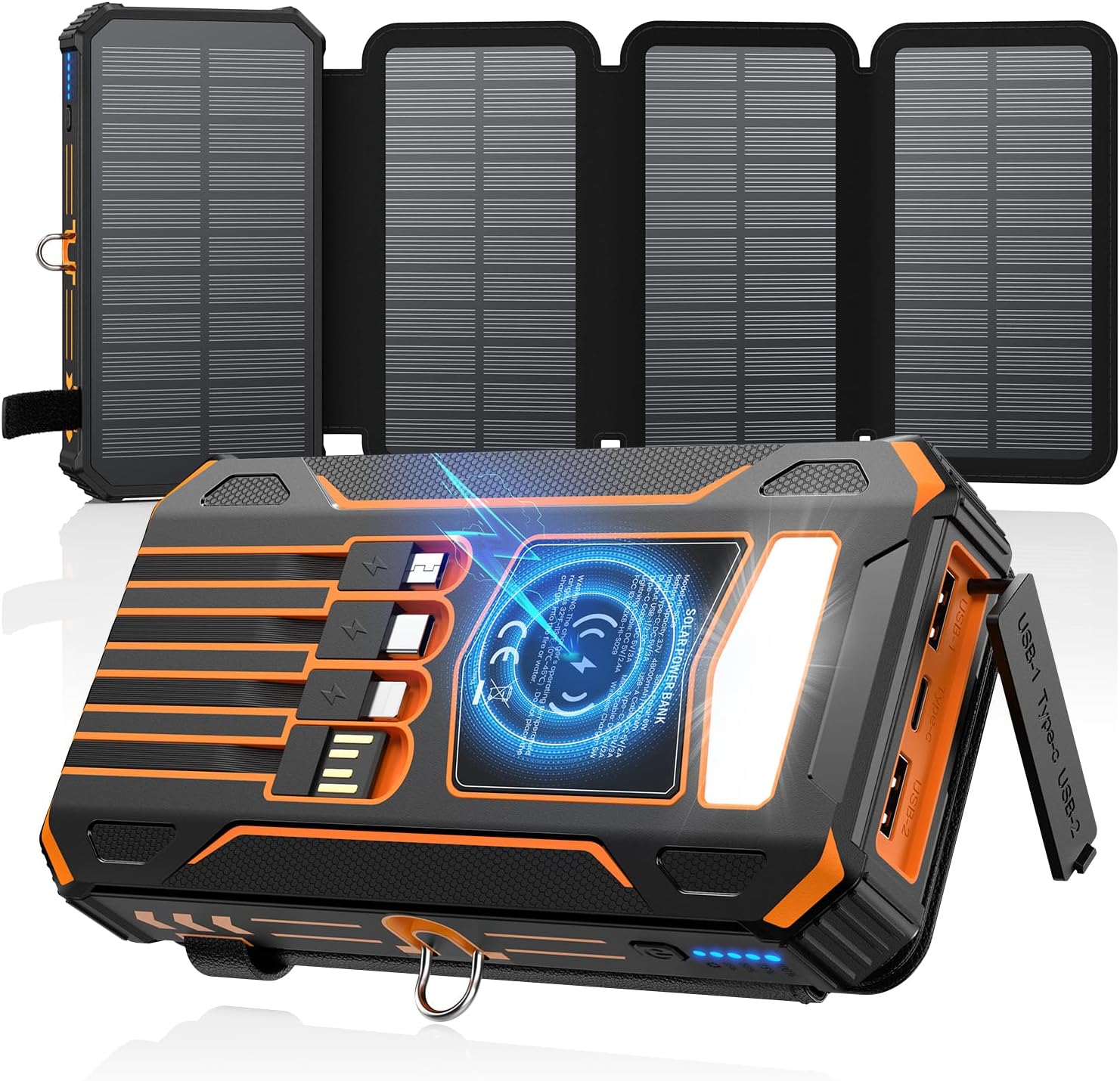
The BLAVOR Solar Power Bank is a versatile portable charger designed for outdoor enthusiasts, campers, hikers, and anyone who needs reliable backup power away from wall outlets. With a 10,000mAh capacity, it offers enough juice to charge a typical smartphone two to three times, making it suitable for weekend camping trips, day hikes, or emergency preparedness kits. Its standout features include built-in wireless charging up to 10W and a 20W USB-C fast charging port, which can bring an iPhone 15 to 65% in just 30 minutes according to the manufacturer.
In terms of battery performance, the real-rated capacity ensures you get the full 10,000mAh, and the power bank holds its charge well over time. The 20W USB-C output is a major plus for fast charging recent smartphones and tablets. The wireless charging pad works with most Qi-compatible devices, including AirPods, though placement requires a bit of care. The integrated solar panel is a nice backup, but it's slow (max 0.23A) and best used to trickle charge the bank over a full day in direct sunlight. Most users will rely on the included USB-C cable for primary charging.
Build quality is a highlight. The outer shell uses flame-retardant ABS and PC materials, with a rubberized skin-feel coating that provides a comfortable grip. It's rated IPX5 waterproof, meaning it can handle rain, splashes, and dusty conditions without issue. The dual LED flashlight is surprisingly bright and features a steady mode and SOS flashing, which is handy for tent setup, night walks, or signaling. A built-in compass carabiner adds extra utility for clipping to a backpack or belt loop.
Portability is excellent: the unit weighs just 9.3 ounces and measures 5.9 x 3.1 x 0.8 inches, easily slipping into a pocket or small pouch. The four LED battery indicators give a clear readout of remaining charge. Operation is simple: press the power button to check battery level or start charging. The power bank is also airline approved, so you can bring it on flights without hassle.
Realistically, the solar charging is not a primary power source; it's a useful emergency trickle. The 10,000mAh capacity is adequate for a day or two of moderate use, but heavy users may want a larger capacity. The wireless charging pad works well but can be a bit finicky with phone cases. Overall, the BLAVOR power bank is a well-rounded, affordable option for campers, hikers, and anyone building a go-bag for emergencies.
For its price, this power bank offers great value. It's a practical gift for outdoor lovers, a reliable companion for short trips, and a solid addition to any emergency kit. If you need a durable, compact, and feature-rich portable charger, the BLAVOR Solar Power Bank is a strong choice.
Frequently Asked Questions
How long does a built-in solar panel take to recharge a 10,000mAh battery?
Integrated solar cells take several days of direct sunlight to replenish a depleted 10,000mAh battery. Because single compact panels produce modest current, manufacturers intend them for emergency top-offs rather than routine charging. For dependable readiness before a storm, recharging your power bank via a USB-C wall outlet ensures a full battery when you need it most.
Can a best survival solar charger charge modern smartphones at fast speeds?
Yes, chargers equipped with 20W USB-C Power Delivery can fast-charge modern smartphones quickly. The BLAVOR 10,000mAh unit can charge an iPhone to 65% in 30 minutes, whereas emergency radios with 5V/1A ports provide slower trickle charging. Reviewing the standard voltage in a phone charger helps match your device needs with compatible outputs.
What is the difference between IPX5 and IPX6 weather resistance?
IPX6 protects against stronger high-pressure water spray than IPX5. An IPX5 enclosure repels light rain splashes, while IPX6 safeguards internal electronics against driving downpours and heavier splashes. Neither rating allows total submersion, so keeping protective rubber port seals closed remains necessary during wet conditions.
Why do emergency survival radios feature hand cranks alongside solar cells?
Hand cranks deliver guaranteed manual power during pitch-black nights and severe overcast storms. While solar cells require sunny skies, a mechanical generator creates immediate current on demand. Cranking a radio for one minute typically yields 15 to 20 minutes of emergency broadcast reception to monitor critical NOAA weather alerts.
How many times can a 10,000mAh emergency pack charge an iPhone 14?
A 10,000mAh battery delivers approximately 1 to 1.5 full charges for an iPhone 14. Due to voltage conversion loss and circuit heat, actual battery output is lower than the cell rating. This performance matches standard reliable backup packs for iPhone 14, supplying adequate energy for navigation, messaging, and emergency calls.



Write Your Review
No reviews yet. Be the first to share your experience!