

Reliable Heavy-Duty Power for Demanding Trips
Running out of juice on a long cross-country haul creates instant panic, especially when your laptop shuts down right before a major deadline. While many shoppers look for extreme capacity ratings like the best power bank 80000mah, real-world utility often comes down to balancing massive battery cell reserves against practical carry weight and strict airline regulations. Massive battery blocks sound enticing for extended off-grid stays, yet safety restrictions cap carry-on batteries at 100 watt-hours without airline pre-approval. For anyone packing tech gear on commercial flights, picking the best portable charger for travel ensures your gear actually boards the plane without being confiscated at security checkpoints.
Modern charging setups prioritize intelligent power delivery over raw, unverified milliamp-hour numbers. High-output ports equipped with USB-C Power Delivery 3.1 push up to 140W to power thirsty laptops, handheld gaming consoles, and flagship smartphones simultaneously. Understanding voltage delivery and fast protocols prevents sluggish top-ups, which is why researching how many volts in a phone charger helps match portable packs to device requirements. Based on our detailed comparison of port wattages, battery capacities, and user feedback, verified high-speed charging units with smart digital displays deliver the safest, most dependable performance for mobile power users.

Pros
- Massive 24,000mAh capacity provides multiple full charges for most phones and tablets.
- 140W PD 3.1 fast charging supports high-power laptops and reduces downtime.
- Informative digital display gives real-time power stats and estimated charge times.
- Three output ports (2 USB-C, 1 USB-A) allow simultaneous charging of multiple devices.
- Compact and travel-friendly size with included travel pouch for easy storage.
Cons
- Weighs 1.39 pounds, which may feel heavy for ultralight backpacking or pocket carry.
- Requires a 5A-rated USB-C cable and a 140W charger to achieve maximum 140W charging speed.
- Display can drain battery if left on continuously; recommended to turn off when not in use.
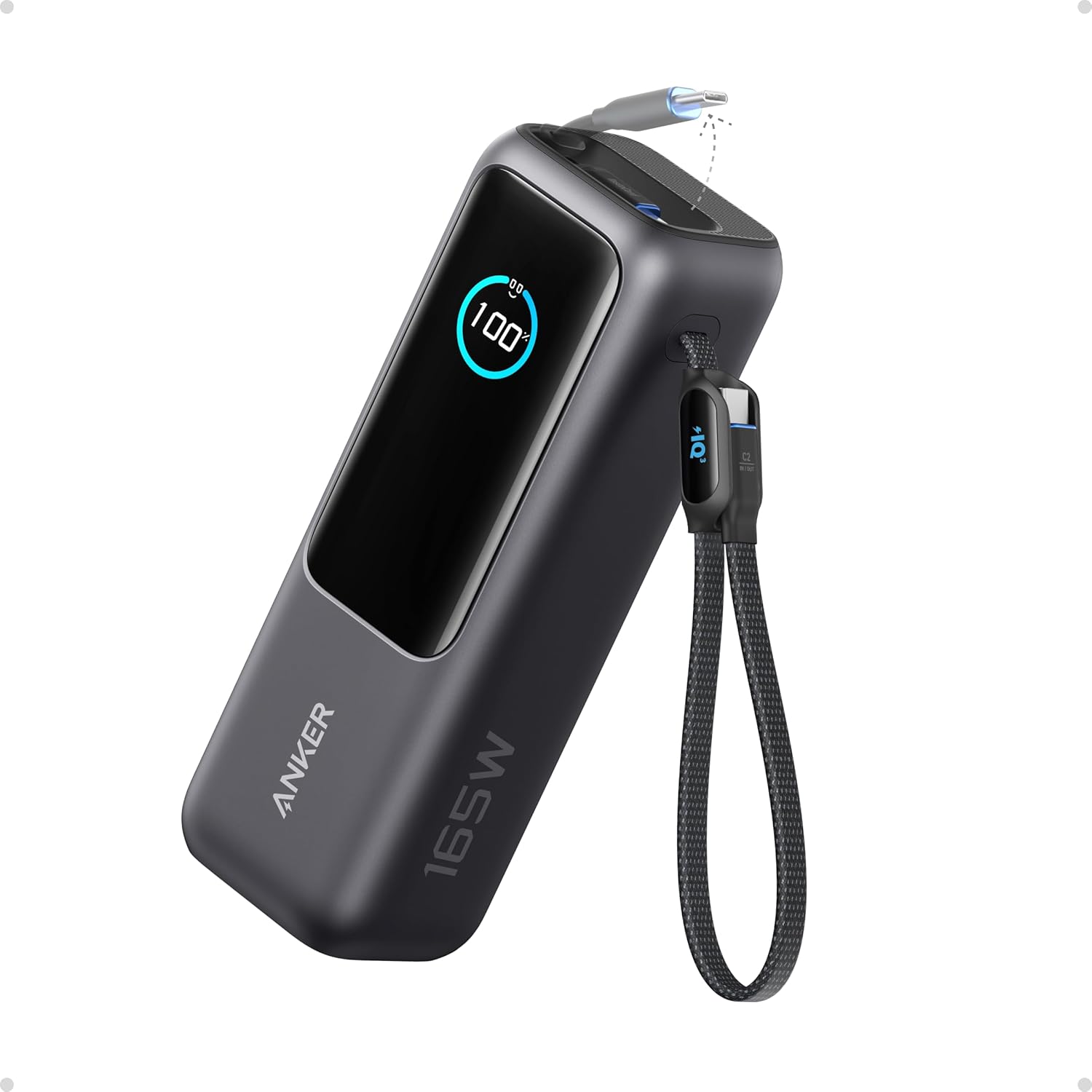
The Anker 737 Power Bank is a high-capacity portable charger designed for users who need serious power on the go. With 24,000mAh of lithium-ion battery capacity and support for 140W Power Delivery 3.1, this power bank can fast-charge laptops, tablets, phones, and other USB-C devices. It's built for campers, RV owners, road trippers, emergency preppers, remote workers, tailgaters, and anyone who relies on portable electronics away from wall outlets.
In real-world use, the 24,000mAh capacity translates to about 4.1 full charges for an iPhone 16 Pro or 1.3 charges for a 2024 13-inch iPad Pro. The 140W output via USB-C can charge a 2021 MacBook Pro 16 inch to 50% in roughly 30 minutes, according to user feedback. The power bank itself recharges in about one hour when using a 140W wall charger, or around two hours with a 65W charger. The smart digital display shows input/output wattage, battery percentage, and estimated time to full charge, helping you manage power efficiently.
Build quality is solid, with a matte black plastic casing that feels durable and premium. The unit measures 6.13 x 2.14 x 1.95 inches and weighs 1.39 pounds, making it relatively compact for its capacity. It includes two USB-C ports and one USB-A port, allowing three devices to charge simultaneously. The USB-C ports support PD 3.1 up to 140W (single port) or share power when multiple ports are used. The USB-A port supports up to 18W. ActiveShield 2.0 temperature monitoring helps prevent overheating during fast charging.
Setting up and using the Anker 737 is straightforward. It comes with a 140W USB-C to USB-C cable and a travel pouch. The power bank is airplane-safe, meeting TSA carry-on requirements. Some users note that the display can drain battery if left on continuously, but this can be managed by turning it off when not needed. Pass-through charging works but may reduce input speed when devices are connected, as noted in user reviews.
A realistic limitation is the weight: at 1.39 pounds, it's not ideal for ultralight backpacking but fine for most travel, camping, and daily carry. The 140W maximum output requires a compatible 5A cable and a 140W charger, which may be an extra purchase for some. Additionally, the display shows non-zero values for total input/output from factory testing, which is normal according to the manufacturer.
Overall, the Anker 737 Power Bank is a strong choice for anyone needing reliable, fast portable power for laptops and multiple devices. It suits campers who need to recharge phones and tablets, RV owners keeping electronics running, remote workers setting up mobile offices, and emergency preppers building a backup power kit. For its capacity, charging speed, and build quality, it offers excellent value for U.S. outdoor enthusiasts and everyday users alike.
Frequently Asked Questions About High-Capacity Power Banks
Can you bring a true 80,000mAh power bank on an airplane?
No, a genuine 80,000mAh battery pack cannot be taken onto commercial passenger flights. Federal aviation rules and TSA regulations limit carry-on lithium-ion batteries to 100 watt-hours (Wh), which translates to roughly 27,000mAh at standard 3.7V cell voltage. High-capacity power stations exceeding this threshold require special airline clearance or ground transportation, making units like the 24,000mAh Anker 737 the legal sweet spot for flying.
How does Best Power Bank 80000mah capacity compare to watt-hour ratings in 2026?
Watt-hours provide the true measurement of total energy storage rather than milliamp-hours alone. Battery manufacturers calculate watt-hours by multiplying milliamp-hours by internal cell voltage (typically 3.7V) and dividing by 1,000. An actual 80,000mAh pack would deliver approximately 296Wh of power, while a 24,000mAh unit supplies around 86.4Wh to power laptops and phones safely.
Can a 140W USB-C portable charger power a laptop and smartphone at the same time?
Yes, multi-port power banks with Power Delivery 3.1 allocate high wattage across multiple ports simultaneously. When connected to a hungry laptop and a phone, the internal circuitry dynamically distributes wattage to maintain rapid charging speeds without dropping the connection. If you are comparing mobile setups, exploring the best portable chargers for iphone 14 shows how multi-port distribution protects battery health across everyday mobile hardware.
What causes power banks to shut off when charging low-draw devices like AirPods?
Automatic power shutoff occurs when connected accessories draw less current than the power bank’s minimum active detection threshold. Many standard battery packs interpret low-draw charging from wireless earbuds or smartwatches as a disconnected cable and power down to conserve energy. Modern premium battery packs include trickle-charge modes or sensitive monitoring displays that maintain a constant flow of power to tiny gadget batteries.
How long does it take to recharge a heavy-duty portable power bank?
Rapid two-way charging can replenish a 24,000mAh battery pack in under one hour when using a compatible 140W wall adapter. Standard low-wattage USB chargers may require six to eight hours to refill that same capacity. Keeping your mobile battery topped up while on long road trips is simple when paired with the best portable charger for car adapters that deliver steady high-wattage input.
Does fast charging at 140W generate excessive heat?
High-wattage charging produces warm temperatures, but integrated thermal management systems actively protect battery cells from overheating. Leading manufacturers build real-time temperature sensors and dynamic power reduction safeguards into their internal circuitry. This active protection ensures the external casing stays within safe operational limits while sustaining fast energy transfer.



Write Your Review
No reviews yet. Be the first to share your experience!