

Sudden rain showers quickly ruin delicate gear when you are far from a wall outlet. Outdoor excursions demand equipment that survives unexpected storms while keeping phones and batteries powered. Investing in the best waterproof solar charger ensures your gear stays energized without risking water damage from splashes or mud. Whether you need a compact backup pack or a marine battery maintainer, durable weatherproofing makes all the difference. Many outdoor travelers pairing these units with a best portable charger for travel value the safety that weather-sealed ports provide under storm clouds.
Solar hardware faces tough outdoor elements, from scorching heat to wind-blown rain. Modern designs incorporate IPX5 water resistance, flame-retardant casings, and tempered glass to withstand constant environmental exposure. Careful review of hardware specifications and verified user feedback shows that quality seals, efficient solar conversion rates, and integrated surge protection keep devices running smoothly. Selecting a model with USB-C fast charging or smart trickle circuitry ensures dependable off-grid power when weather turns severe.

Pros
- Compact and lightweight, easy to store or move between vehicles.
- Weatherproof design handles rain, snow, and humidity without issues.
- Built-in charge controller protects against overcharge and reverse current.
- Works with a wide range of 12V batteries including lithium and AGM.
Cons
- Low wattage (7.5W) means it's only for maintenance, not charging dead batteries.
- Indicator light can be difficult to see in bright sunlight.
- Suction cups may lose grip on very hot or cold surfaces over time.
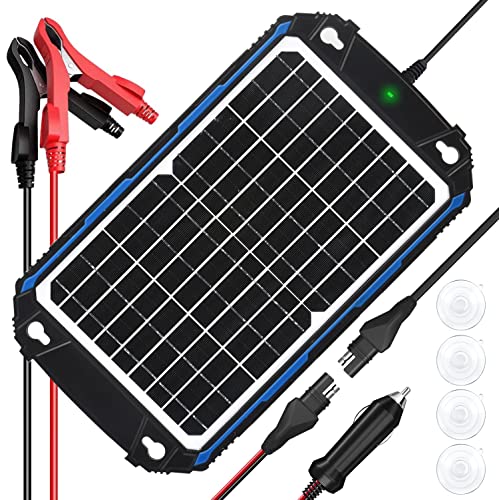
The POWOXI 7.5W Solar Battery Trickle Charger is a practical, portable solar panel designed to keep 12V batteries from draining when not in use. Whether you own a car, RV, boat, motorcycle, or even a lawn tractor, this small panel maintains your battery's charge using free solar energy, so you never have to worry about a dead battery after a long storage period.
This charger is best suited for campers, RV owners, boaters, and emergency preppers who need a reliable way to keep their vehicle or equipment batteries healthy. It's also a great choice for homeowners with seasonal vehicles like classic cars, ATVs, or snowmobiles. If you're a road tripper or van lifer, you can place it on your dashboard while parked to keep your starter battery topped off without draining your house battery.
In terms of performance, the 7.5W panel provides a trickle charge (0.41A max) that is ideal for maintaining a fully charged battery. It is not a fast charger, so don't expect it to revive a deeply discharged battery. According to user feedback, it works well in direct sunlight, and the built-in smart controller prevents overcharging and reverse current, making it safe for long-term connections. The IP67 waterproof rating means it can handle rain, snow, and even marine environments without issue.
Build quality is solid for the price. The panel uses a durable ABS+PC frame rather than a flexible design, so it won't warp or crack easily. The high-transparency glass is impact-resistant and low-iron tempered, helping it withstand wind, snow, and minor impacts. It weighs only 2.3 pounds, making it easy to move around. Setup is straightforward: you can use the included suction cups to stick it to a windshield or hood, or simply lay it on a flat surface. The included alligator clips and cigarette lighter adapter give you flexibility in connecting to your battery.
One realistic limitation is that the panel's output is dependent on sunlight. On cloudy days or in shaded areas, charging will be minimal. Also, the LED indicator can be hard to see in bright sunlight, but you can check it by shading the panel briefly. Some users have reported that the suction cups may lose adhesion in extreme heat, but alternative mounting options like using Velcro or placing it on the dashboard work well.
Overall, the POWOXI 7.5W solar trickle charger is an excellent value for anyone who wants to maintain battery health without plugging into an outlet. It's especially useful for campers, RV owners, and emergency preppers who want peace of mind that their vehicles or equipment will start when needed. If you need a simple, affordable, and reliable way to keep your 12V batteries topped off, this is a solid choice.
Setting up the POWOXI 7.5W solar charger is simple and tool-free. The kit includes a solar panel with attached cables, suction cups, alligator clips, and a cigarette lighter adapter. You can mount the panel on a windshield, dashboard, or hood using the suction cups, or simply lay it on a flat surface. Then connect the cable to your battery using either the alligator clips or the lighter adapter. The built-in controller handles everything automatically, so you can leave it connected indefinitely.

Pros
- Wireless charging works with most phones and AirPods, adding convenience.
- 20W fast charging via USB-C quickly tops up devices.
- Dual LED flashlight is bright and includes SOS mode for emergencies.
- Rugged build with IPX5 waterproof rating and shockproof design.
- Compact and lightweight for easy portability on hikes or in a bag.
Cons
- Solar charging is very slow; it's best used as a backup, not a primary charging method.
- 10,000mAh capacity may not be enough for multiple device charges on longer trips.
- Wireless charging pad placement can be finicky and requires precise alignment.
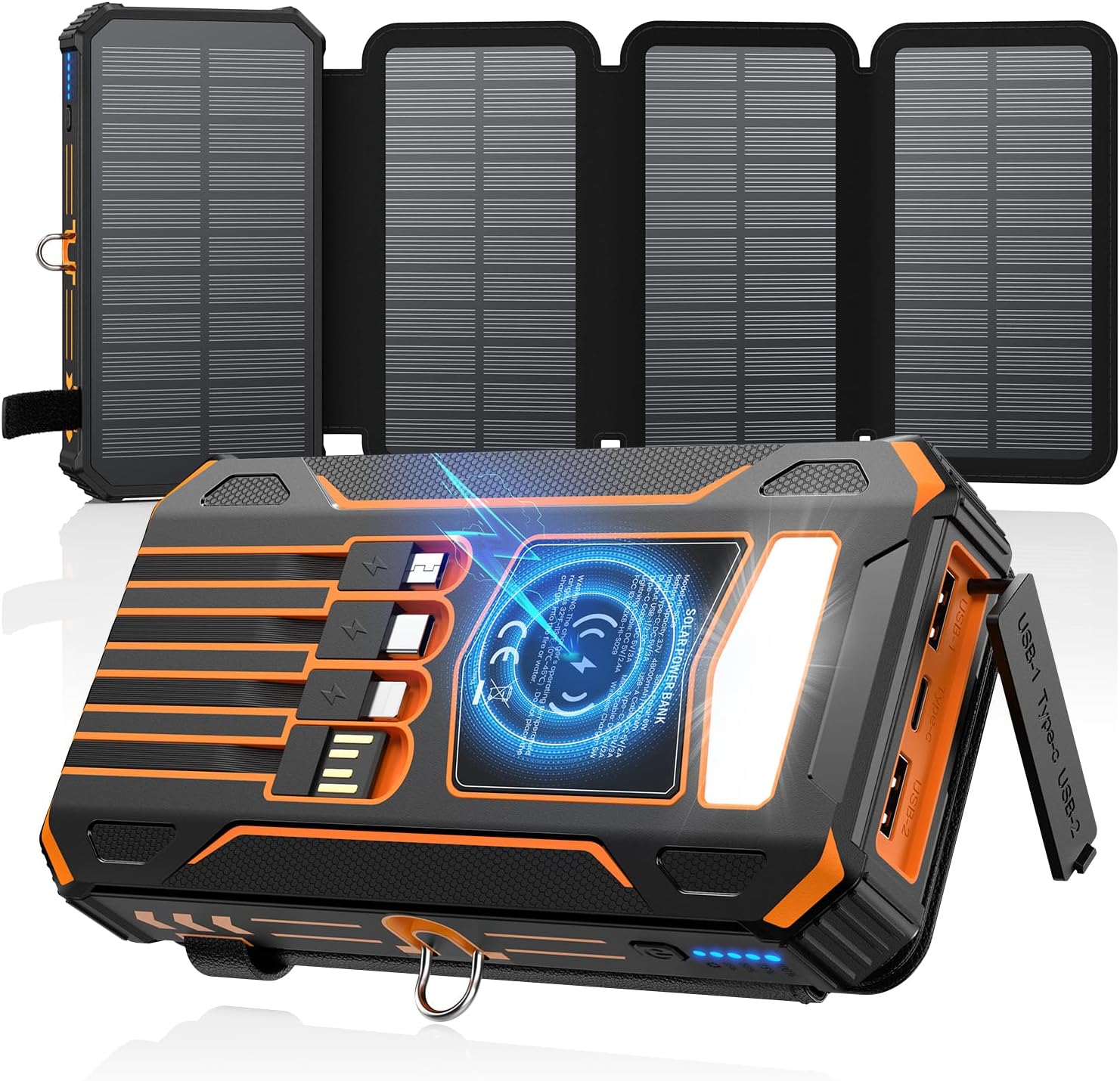
The BLAVOR Solar Power Bank is a versatile portable charger designed for outdoor enthusiasts, campers, hikers, and anyone who needs reliable backup power away from wall outlets. With a 10,000mAh capacity, it offers enough juice to charge a typical smartphone two to three times, making it suitable for weekend camping trips, day hikes, or emergency preparedness kits. Its standout features include built-in wireless charging up to 10W and a 20W USB-C fast charging port, which can bring an iPhone 15 to 65% in just 30 minutes according to the manufacturer.
In terms of battery performance, the real-rated capacity ensures you get the full 10,000mAh, and the power bank holds its charge well over time. The 20W USB-C output is a major plus for fast charging recent smartphones and tablets. The wireless charging pad works with most Qi-compatible devices, including AirPods, though placement requires a bit of care. The integrated solar panel is a nice backup, but it's slow (max 0.23A) and best used to trickle charge the bank over a full day in direct sunlight. Most users will rely on the included USB-C cable for primary charging.
Build quality is a highlight. The outer shell uses flame-retardant ABS and PC materials, with a rubberized skin-feel coating that provides a comfortable grip. It's rated IPX5 waterproof, meaning it can handle rain, splashes, and dusty conditions without issue. The dual LED flashlight is surprisingly bright and features a steady mode and SOS flashing, which is handy for tent setup, night walks, or signaling. A built-in compass carabiner adds extra utility for clipping to a backpack or belt loop.
Portability is excellent: the unit weighs just 9.3 ounces and measures 5.9 x 3.1 x 0.8 inches, easily slipping into a pocket or small pouch. The four LED battery indicators give a clear readout of remaining charge. Operation is simple: press the power button to check battery level or start charging. The power bank is also airline approved, so you can bring it on flights without hassle.
Realistically, the solar charging is not a primary power source; it's a useful emergency trickle. The 10,000mAh capacity is adequate for a day or two of moderate use, but heavy users may want a larger capacity. The wireless charging pad works well but can be a bit finicky with phone cases. Overall, the BLAVOR power bank is a well-rounded, affordable option for campers, hikers, and anyone building a go-bag for emergencies.
For its price, this power bank offers great value. It's a practical gift for outdoor lovers, a reliable companion for short trips, and a solid addition to any emergency kit. If you need a durable, compact, and feature-rich portable charger, the BLAVOR Solar Power Bank is a strong choice.
Frequently Asked Questions
Can the Best Waterproof Solar Charger survive heavy rainstorms?
Yes, but water resistance depends on the specific ingress protection build and port seals. Heavy-duty panels like the SUNER POWER Waterproof 12W 12V Solar Battery feature tempered solar glass and sealed frames built to handle downpours, snow, and hail. Compact battery packs typically feature IPX5 water resistance, which repels rain and splashes but cannot survive complete submersion. Always keep rubber port covers firmly closed to stop water ingress.
How does an IPX5 rating protect a portable solar power bank?
An IPX5 rating ensures protection against low-pressure water streams from any angle. This ingress level stops heavy rain and unexpected splashes from reaching delicate internal circuitry. Units like the BLAVOR Solar Power Bank 10,000mAh combine this rating with flame-retardant casings and silicone bumpers for extra durability. Note that IPX5 does not protect against prolonged underwater immersion.
What is the difference between a solar trickle maintainer and a solar power bank?
A solar trickle maintainer continuously preserves 12V lead-acid or lithium batteries, whereas a solar power bank stores energy for handheld electronics. Models like the POWOXI Upgraded kit connect straight to vehicle batteries to stop parasitic drain. Drivers exploring backup options often compare these kits with a best portable charger for car needs. Power banks focus instead on USB-C outputs for mobile devices.
Do waterproof solar panels charge efficiently through vehicle windows?
No, vehicle glass notably diminishes solar panel performance. Factory tinting and UV coatings reflect a significant amount of usable light, lowering overall solar conversion. While placing a trickle charger on your dashboard offers convenience, exterior mounting provides unobstructed sunlight. Units with suction cups allow flexible placement, but direct outdoor exposure delivers maximum charging current.
How long does an integrated solar cell take to recharge a power bank?
Small integrated solar cells require multiple days of full sun to recharge a 10,000mAh pack. Built-in panels function primarily as an emergency backup rather than everyday charging. Reviewing how many volts in a phone charger clarifies why standard USB-C wall charging is dramatically faster. Charge your power bank at home first, relying on solar power when off-grid.


Write Your Review
No reviews yet. Be the first to share your experience!