

Running out of juice on a remote work trip or during a sudden storm throws a wrench into your entire digital setup. When your mobile router, smartphone, or hotspot suddenly dies, getting back online becomes a massive headache. Investing in the best wifi power bank provides the dependable backup battery capacity needed to keep mobile routers and connected devices running without interruption. Based on a close look at manufacturer watt-hour ratings, port outputs, and user feedback, modern battery packs handle continuous wireless hardware draws far better than standard pocket chargers. Pairing high capacity with a reliable best portable charger for travel guarantees that your gear stays powered up wherever work takes you.
Evaluating technical specs reveals how crucial wattage distribution and battery chemistry really are for continuous gear operation. While typical power banks prioritize brief smartphone top-offs, running wireless routers or multiple gadgets demands clean, steady output and strong thermal protection. Modern options like high-capacity lithium packs or ultra-durable LiFePO4 cells prevent unexpected voltage drops that can reboot your internet equipment. Before plugging in delicate hardware, understanding how many volts in a phone charger delivers insight into matching the right port voltage to your router, ensuring steady uptime and preventing unexpected shutdowns during critical tasks.

Pros
- Enormous 70000mAh capacity easily lasts a week for moderate users, great for multi-day trips.
- Fast charging (30W) works well with iPhones and Android phones, cutting recharge time significantly.
- Solid build with integrated lanyard and accurate LED battery display.
- Versatile compatibility with most 5V USB devices including phones, tablets, gaming consoles, and heated gear.
Cons
- Heavy at 1.85 lbs—not ideal for ultralight backpacking or pocket carry.
- Not allowed on airplanes due to capacity (259Wh exceeds TSA limit).
- Some users report actual capacity may be slightly lower than advertised, though still high for real-world use.
The Liahomco 70000mAh Portable Charger is a high-capacity power bank designed for users who need serious battery backup away from outlets. It’s built for campers, RV owners, road trippers, emergency preppers, tailgaters, and anyone who relies heavily on their devices during extended outdoor activities or power outages. This external battery pack can charge smartphones 15-20 times or tablets 5-8 times on a single charge, making it a reliable companion for week-long trips.
In real-world use, the 30W USB-C PD and QC 3.0 fast charging is a standout feature. It can bring an iPhone from empty to 60% in about 30 minutes, as long as your cable and device support fast charging. The unit includes five output ports (two 30W USB-A, two 15W USB-A, and one 20W USB-C) plus two input options (USB-C and Micro USB), so you can charge up to five devices at once. The LED display is accurate and easy to read, letting you plan your charging needs without surprises.
Build quality feels solid with a compact footprint (5.7 x 2.7 x 2 inches) and a weight of 1.85 pounds. While it’s not pocket-friendly, the included lanyard allows you to hang it from a backpack, tent hook, or belt loop. The lithium-polymer battery pack includes multiple safety protections against overcharging, overheating, and short circuits. It also works well with 5V USB-powered gear like handheld fans, heated jackets, Bluetooth speakers, and camera batteries—adding versatility beyond just phones and tablets.
One realistic limitation is the weight: at nearly two pounds, it’s better suited for car camping, RV use, or base camps than for ultralight backpacking. Also, the 70000mAh (259Wh) capacity disqualifies it from air travel, so it’s strictly a ground-based companion. Some customer feedback suggests the actual usable capacity may be slightly under the advertised figure (around 180-190Wh in tests), but for most outdoor and emergency needs, that still provides ample power for several days.
Setup is straightforward: charge it fully using the included USB-C cable (or a wall charger), then plug in your devices. For first-time use, the manual suggests a full drain and recharge cycle to calibrate the battery gauge. Maintenance is minimal—store it in a cool, dry place and top it up every few months if not in use. The package includes the power bank and a user manual; no wall adapter is included, but any standard USB-A or USB-C charger will work.
Overall, the Liahomco 70000mAh power bank is a solid investment for campers, RVers, preppers, and road trippers who prioritize capacity over portability. It’s not a pocket-sized daily charger, but for multi-day off-grid stays or emergency backup at home, its massive battery and fast charging make it a practical choice. If you need a beefy power bank for your next camping trip or hurricane season prep, this one delivers reliable juice at a reasonable price point.

Pros
- Remarkably compact and lightweight for the capacity, easy to toss in a backpack or glove compartment.
- Fast recharge capability (0-80% in 1.5 hours) means less downtime between uses.
- Multiple output ports including AC outlets, so you can power laptops, small appliances, and USB devices at once.
- LiFePO4 battery chemistry offers excellent longevity and safety, with thousands of charge cycles.
- Quiet operation with no loud fan, making it suitable for indoor or tent use.
Cons
- Limited to 100W continuous output, so it cannot run high-power appliances like heaters, kettles, or large refrigerators.
- Pass-through charging uses charge/discharge method rather than direct pass-through, which may stress the battery over time.
- Some users report a faint humming noise under load, though not disruptive in most environments.
The DARAN R100 Portable Power Station is a compact, lightweight power bank that bridges the gap between a standard USB power bank and a full-sized generator. With a 28,000mAh (89.6Wh) LiFePO4 battery and a 100W continuous output (200W surge), it's designed to keep your essential electronics running during camping trips, RV adventures, road trips, tailgating, power outages, and everyday use.
This unit is best suited for campers, RV owners, outdoor enthusiasts, emergency preppers, remote workers, van lifers, tailgaters, and anyone who needs a reliable, portable backup power source for low-wattage devices. It excels at charging smartphones, tablets, laptops, cameras, drones, mini-fridges, CPAP machines, LED string lights, and small fans. However, it won't run high-draw appliances like space heaters, electric kettles, or air conditioners.
Performance-wise, the R100 delivers solid runtime for its size. According to user feedback and specifications, it can power a typical laptop (45W) for about 2 hours, charge a smartphone multiple times, or keep a mini-fridge running for a couple of hours. The 100W AC output is pure sine wave, which is safe for sensitive electronics. Charging the station itself is impressively fast: using the AC wall charger and USB-C simultaneously, you can go from 0 to 80% in about 1.5 hours. It also supports solar charging (up to 40W via DC5521), making it a viable option for off-grid recharging.
Build quality is a standout feature. The LiFePO4 battery chemistry offers over 3,500 charge cycles, far outlasting standard lithium-ion batteries. The unit includes a comprehensive battery management system (BMS) with protection against overvoltage, overcurrent, short circuits, and temperature extremes. The casing is made from ABS plastic, which feels sturdy yet lightweight. The LED display clearly shows remaining battery percentage, though it's basic and doesn't show runtime estimates. The built-in flashlight with four brightness levels and SOS mode is a practical addition for emergencies.
Ease of use is straightforward: just plug in your devices and press the power button. The unit is silent during operation (no fan), though some users have noted a faint humming when powering devices under load. Storage is simple: turn it off, keep it in a dry, room-temperature place, and recharge every three months to maintain battery health. The included components are minimal (just the power station), so you'll need to supply your own wall charger, USB cables, and solar panel if desired.
Realistic limitations include the 100W cap, which means you can't run power-hungry gear. Also, the pass-through charging method is the charge/discharge type rather than direct pass-through, so it's best to charge the station fully before using it to power devices. A few users have reported that the unit didn't last as long as expected with very low-power loads (like string lights), but that may be due to the inverter's overhead. Overall, the DARAN R100 offers excellent value for its price point, providing a reliable, portable, and safe power solution for anyone who needs to keep their electronics charged on the go or during emergencies.
The DARAN R100 features seven output ports: two AC outlets (100W total, pure sine wave), two USB-C ports (one 45W PD, one 15W), two USB-A ports (one 18W QC, one 15W), and one DC5521 port (60W). This variety allows you to charge laptops, phones, tablets, cameras, and small appliances simultaneously. The USB-C PD port can fast-charge compatible laptops and phones. For input, the station supports AC wall charging (via included cable), USB-C PD charging (up to 45W), car charging, and solar charging (up to 40W via DC5521). The dual input capability (AC + USB-C) enables ultra-fast charging from 0-80% in about 1.5 hours. Note that the solar panel is not included, but any 40W panel with DC5521 output can be used.
Frequently Asked Questions
Can a power bank run a Wi-Fi router during a power outage?
Yes, a power bank can easily power a portable hotspot or home router if the voltage and connector types match. Most mobile travel routers accept direct 5V USB-C or USB-A connections, while traditional home routers often need 12V DC output or an AC outlet. Units like the DARAN power station feature dedicated AC plugs and DC5521 ports specifically to handle these larger loads. Drivers can also keep their backup batteries fully topped up on the road using a dedicated portable charger for car setup.
Can you take a 70,000mAh portable charger on a commercial flight?
No, battery packs exceeding 100 watt-hours cannot be brought onto commercial passenger flights under standard airline safety rules. A 70,000mAh battery delivers approximately 259 watt-hours, which far exceeds the TSA limit for carry-on luggage. These ultra-high capacity chargers work best for car camping, road trips, and emergency home power setups. Anyone traveling by air should stick to battery packs rated at or below 27,000mAh to stay compliant.
What makes LiFePO4 battery chemistry better for long-term backup power?
LiFePO4 cells provide significantly longer cycle life and superior thermal stability compared to conventional lithium-ion batteries. While regular lithium packs often degrade after 500 charge cycles, LiFePO4 batteries can exceed 3,500 cycles before experiencing noticeable capacity loss. They also run cooler under heavy continuous loads, making them ideal for running small generators and sensitive networking gear. This durability ensures reliable power during unexpected seasonal blackouts.
Can high-capacity battery packs recharge mobile phones and hotspots simultaneously?
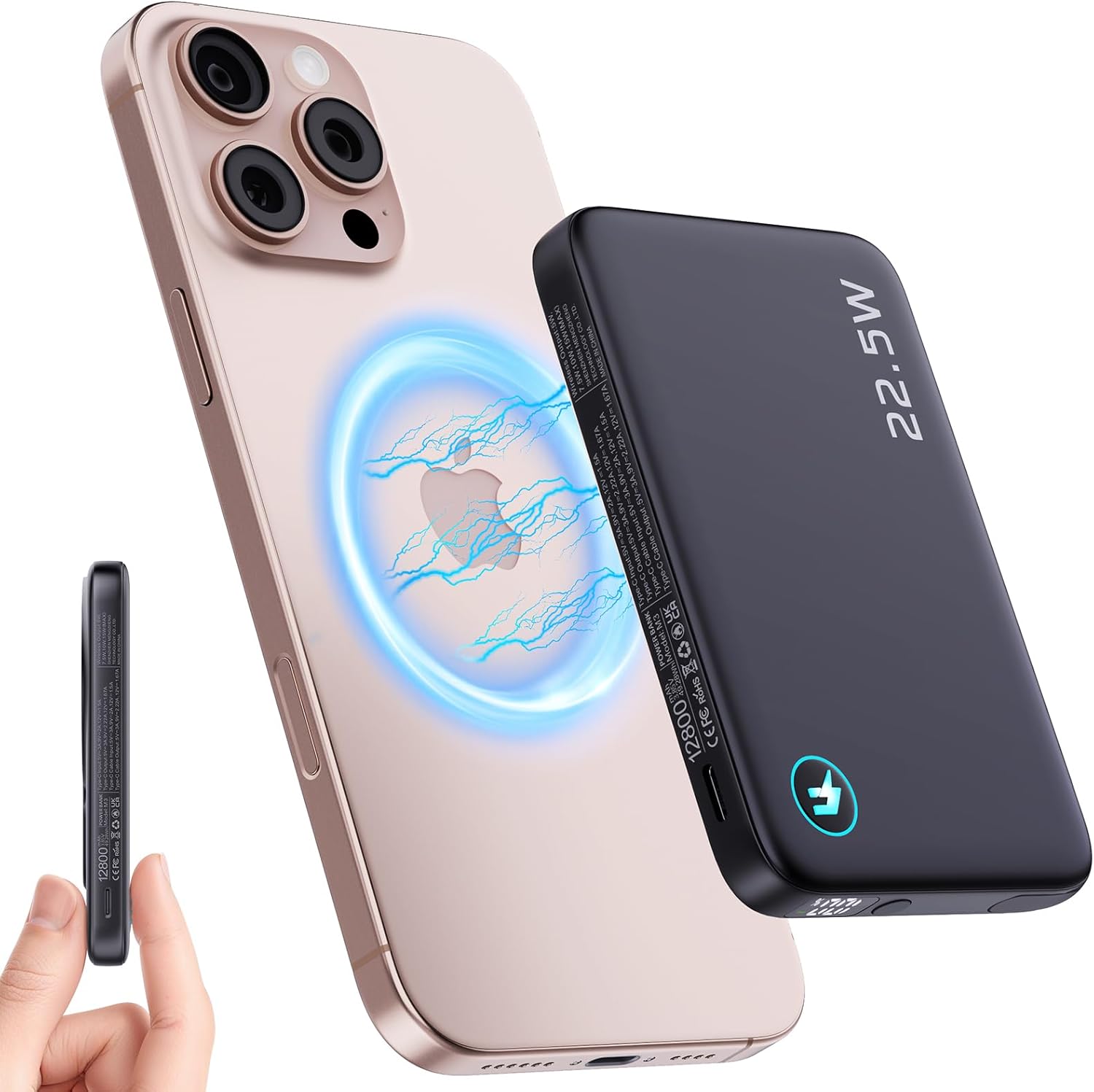
Yes, multi-port power banks support concurrent charging for several handheld devices and wireless hotspots. Chargers featuring multiple USB-A and USB-C ports dynamically split wattage to supply power across all connected equipment without causing surges. When using everyday mobile devices, you can also keep a separate magnetic portable charger for Android handy for quick cordless top-offs. This multi-port flexibility prevents you from juggling cords when multiple gadgets drop to critical battery levels.
What is the best way to choose the Best Wifi Power Bank for 2026?
Prioritize usable watt-hour capacity, necessary port selections, and proper voltage compatibility for your specific networking hardware. Models with AC outlets or DC barrels support traditional residential modems, while compact USB-C battery banks excel at powering portable pocket hotspots. Verifying built-in screen indicators helps you track exact remaining percentages so your wireless setup never powers down unexpectedly.




Write Your Review
No reviews yet. Be the first to share your experience!