

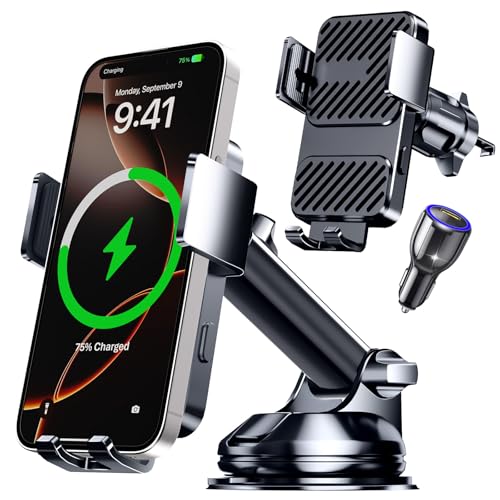
Running intensive GPS navigation apps while streaming music can rapidly drain your smartphone battery before you even reach your destination. Standard vehicle USB ports often supply barely enough juice to keep the screen on, leaving drivers with a hot, sluggish device. Investing in the best wireless charger for your car provides an effortless way to maintain high battery levels without wrestling with tangled charging cords while merging onto highways. Modern wireless mounts use motorized sensor arms or strong magnetic arrays to lock your phone directly in front of the air conditioning vent, preventing thermal throttling during warm summer road trips.
Careful evaluation of manufacturer power profiles, physical clamp stability, and customer feedback shows that reliable Qi charging requires proper alignment and steady wattage delivery. While many drivers carry a portable wireless charging pack for off-road emergencies or rely on an extended battery case during long flights, a dedicated vehicle mount handles daily travel seamlessly. Selecting an option with foreign object detection, wide case thickness tolerance, and a robust ball joint socket ensures your phone remains powered and visible without distracting you from the road ahead.





Frequently Asked Questions About Vehicle Wireless Charging
Do wireless car chargers support full 15W fast charging for iPhones?
No, standard Qi wireless car mounts generally cap iPhone wireless speeds at 7.5W unless they feature official Apple MagSafe or Qi2 certification. Most universal 15W wireless car chargers deliver their top 15W speed only to compatible Android devices like LG, while Samsung Galaxy models charge at 10W. To achieve even 7.5W or 10W speeds in 2026, your setup requires a QC 3.0 or 18W USB-C 12V cigarette lighter adapter rather than a basic built-in vehicle USB port.
Can I charge my phone through a protective phone case on the best wireless charger for your car?
Yes, most modern mounts charge effectively through standard rubber, TPU, or plastic cases up to 4mm thick. However, cases with metal kickstands, ring holders, credit card wallets, or thick magnetic plates trigger foreign object detection and interrupt power transfer. For magnetic mounts like the LISEN or WEKEFON units, you need either a bare phone, an official MagSafe case, or an external metal ring attached to the exterior.
Why does my phone get hot while charging on a vehicle wireless mount?
Heat buildup happens naturally during inductive energy transfer, especially when running screen-intensive GPS maps and cellular data under direct sunlight. Mounting the cradle directly onto an active air vent helps circulate cool air behind the phone to dissipate thermal energy. If you prefer keeping your cabin cool without cluttering vents, keeping a fast charging iPhone battery pack in your glove compartment provides an alternative charging method during scorching summer drives.
How does auto-clamping work when the car engine is turned off?
Many auto-clamping cradles include built-in supercapacitors that store residual electrical power for several button presses after you shut off your vehicle. This feature lets you tap the side quick-release sensor to retrieve your smartphone without restarting the ignition. Budget models without capacitor backup require you to grab your phone before turning off the key, otherwise the motorized arms remain locked in place.
Do magnetic car mounts hold heavy phones securely on bumpy roads?
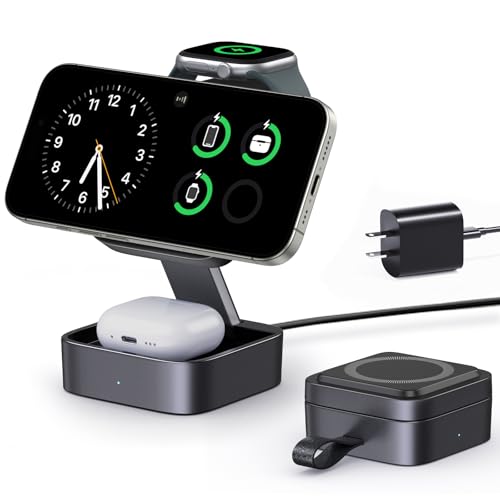
Yes, magnetic chargers equipped with N52 or N55 neodymium magnets deliver between 3000gf and 3800gf of holding force to prevent heavy phones from slipping. These high-strength magnetic rings keep larger devices like the iPhone Pro Max or Galaxy Ultra stable over potholes and railroad tracks. While multi-device households often keep a multi-device charging station in the living room for shared family gadgets, a high-torque magnetic mount provides the most dependable one-handed snap-and-go convenience on the road.





Write Your Review
No reviews yet. Be the first to share your experience!