

Relying on commercial DC fast chargers can take a heavy toll on your wallet, especially with network rate spikes and idle fees stacking up. Switching to a dedicated Level 2 setup at home gives you full control over electricity costs while letting you wake up to a full battery. Based on manufacturer specifications and residential utility structures, keeping your overall cost to charge car at charging station low comes down to amperage flexibility and smart off-peak scheduling. Many drivers who carry a reliable portable charger for car emergencies also install a dedicated home wall unit for daily charging.
A quality Level 2 unit delivers up to 11.5 kW of power, easily outpacing sluggish Level 1 trickle charging without straining your electrical service panel. Choosing certified hardware with UL or ETL listings ensures safe operation during extended high-draw overnight sessions. Between weatherproof enclosures that handle freezing garages and smart mobile apps that track kilowatt consumption, the right setup delivers consistent savings throughout 2026.
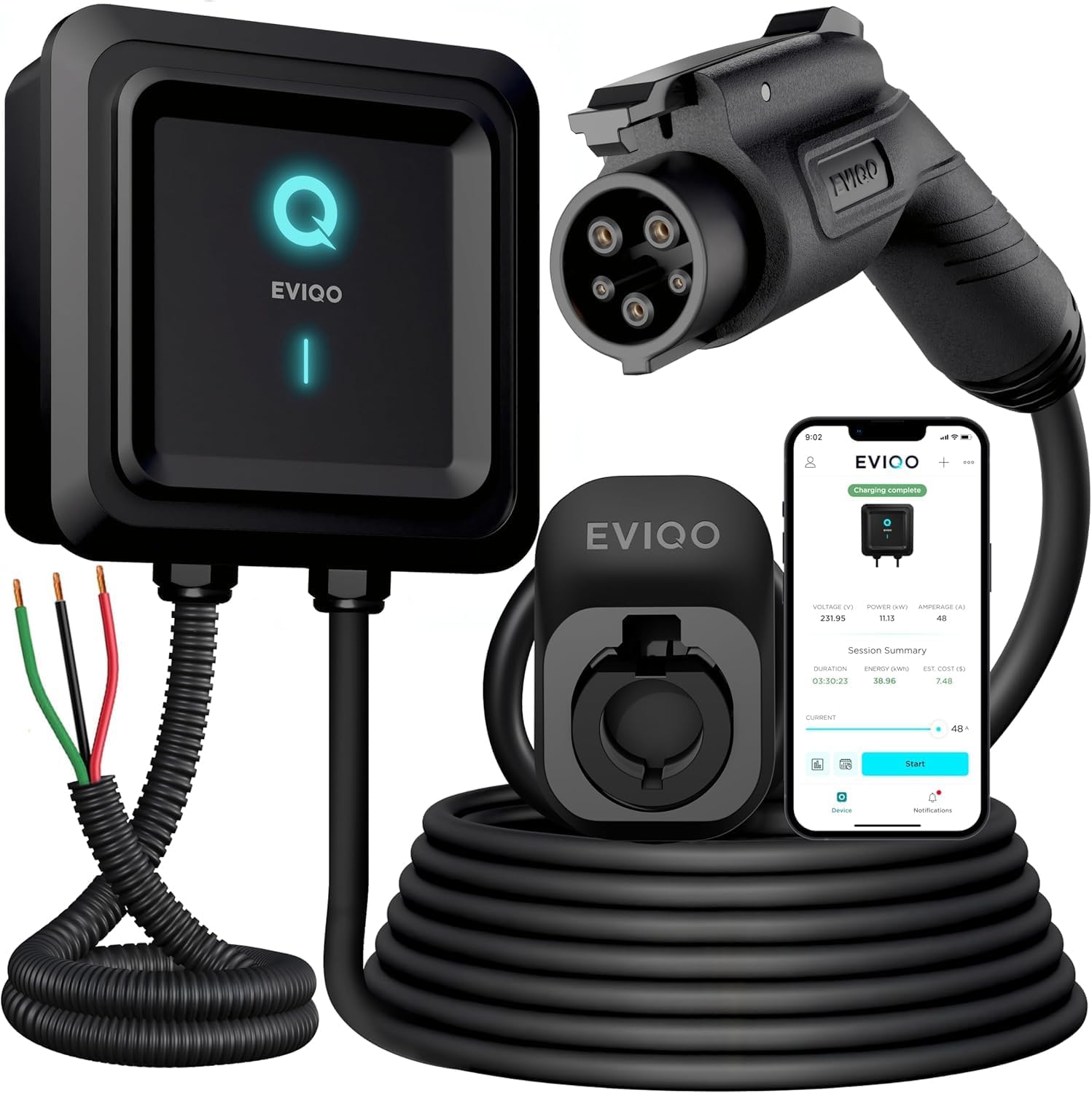
Pros
- Fast charging speed: 48A output delivers up to 46 miles of range per hour, among the fastest for home chargers.
- Excellent build quality: Heavy-duty, weatherproof enclosure with liquid-tight conduit and rubberized connector for long-term durability.
- Smart features: User-friendly app with scheduling, current adjustment, real-time monitoring, and OTA firmware updates.
- Easy installation: Hardwired design with clear instructions, mounting template, and theft-deterrent screws included.
- Great value: Competitive price point with high ratings and eligibility for federal tax credit and utility rebates.
Cons
- Hardwired installation requires a licensed electrician and a dedicated 60A circuit, which may add upfront cost.
- J1772 connector requires a separate adapter for Tesla vehicles (not included).
- App-based smart features rely on stable WiFi; some users may experience connectivity issues in basements or garages.
The EVIQO Level 2 EV Charger is a hardwired home charging station designed for EV and plug-in hybrid owners who want fast, reliable, and smart charging. This 48-amp unit delivers up to 11.5 kW, providing about 46 miles of range per hour – enough to fully recharge most EVs overnight. It's best suited for homeowners, RV owners who also drive electric vehicles, and anyone looking for a weatherproof, UL-certified charger that can be installed indoors or outdoors. The charger is also a great choice for emergency preppers who want to ensure their EV is always ready, and for remote workers who rely on their vehicle for daily commuting.
In real-world use, the EVIQO charger excels in both performance and convenience. The 25-foot charging cable offers plenty of reach for various parking configurations, and the heavy-duty J1772 connector with a metal latch feels secure and durable. The unit supports adjustable current from 6 to 48 amps, allowing you to match your home's electrical capacity. The smart app lets you set charging schedules, monitor energy consumption, and track costs – all helpful for managing electricity bills. The app also provides real-time voltage, current, and power readings, and you can adjust the amperage on the fly. The charger supports OTA firmware updates, which means it can improve over time.
Build quality is a standout feature. The enclosure is IP66 and NEMA 4 rated, meaning it's dust-tight and protected against heavy rain, snow, and even hose-directed water. The unit includes a steel shielding on the mainboard for added protection, and an external reset button clears faults without needing to open the charger. The high-visibility fluorescent holster makes it easy to find the connector in low light, and the theft-deterrent mounting screws add security for outdoor installations. The charger is also UL, ETL, FCC, and Energy Star certified, ensuring safety and efficiency.
Installation is straightforward for a licensed electrician: the hardwired design requires a dedicated 60-amp circuit, and the 40-inch input cable is designed for convenient conduit connection. The included mounting template and hardware make wall mounting simple. The charger is also eligible for the 30% federal tax credit and many local utility rebates, which can significantly reduce the net cost. The 3-year manufacturer warranty and responsive US-based customer support add to the value.
That said, there are a few limitations. Hardwired installation means you can't easily move the unit, and you'll need a professional electrician if you're not comfortable with electrical work. The J1772 connector is universal for all non-Tesla EVs, but Tesla owners will need to purchase a separate adapter. The app's smart features depend on a stable WiFi connection; some users in garages with weak signals may experience occasional drops. Overall, the EVIQO Level 2 EV Charger offers exceptional performance, build quality, and smart features at a competitive price. It's an excellent choice for any EV owner who wants a fast, reliable, and future-proof home charging solution.

Pros
- Up to 3.5kW Level 2 charging significantly reduces charge time compared to Level 1 only units - great for RV park stops or home garages.
- Dual adapter system (NEMA 6-20 and 5-15) means you can charge from 240V or 120V outlets, offering flexibility whether at home, campground, or a friend's house.
- IP65 rated control box and premium materials give peace of mind for outdoor and travel use in rain, dust, or snow.
- 20-foot cable length is generous and reduces the need for extension cords, simplifying setup.
Cons
- Not compatible with Tesla vehicles without a separate J1772 adapter (not included), so Tesla owners may want to consider the VDLPOWERVP EC13/EC23 models instead.
- NEMA 6-20 plug requires a specific 240V outlet - many homes may have NEMA 14-50 or 6-50, so adapters might be needed for full Level 2 speed.
- Level 1 (120V) charging at 12A is relatively slow - fine for overnight top-offs but not ideal for quick charges on road trips.
The VDLPOWERVP EC10 is a portable Level 1 and Level 2 electric vehicle charger designed for EV owners who need a flexible, travel-friendly charging solution. This unit is particularly well-suited for RV owners, road trippers, homeowners wanting a backup charger, and emergency preppers who rely on their EV during power outages or off-grid stays. It also works great for tailgaters, van lifers, and anyone who regularly drives to campsites or remote work locations where charging infrastructure may be limited.
At the heart of the EC10 is a 16-amp, 3.5kW charging capability when used with the included NEMA 6-20 240V plug. This Level 2 charging rate is about four times faster than a typical Level 1 charger using a standard 120V household socket (which runs at 12A). For most EV owners, the Level 2 option means you can add around 12-15 miles of range per hour, allowing a full overnight charge for daily commutes or topping up at an RV park before hitting the road again. The included NEMA 5-15 adapter lets you plug into any standard US wall outlet for Level 1 charging, which is slower but perfect for use at home or when only a 120V outlet is available.
Build quality is a priority here. The control box is rated IP65 waterproof and dustproof, so it can handle rain, snow, or dusty campsites without issue. The unit also features intelligent chip-based protection against lightning, leakage, overcurrent, and short circuits, with real-time monitoring provided by LED indicator lights on the control box. The 20-foot cable is thick and flexible, giving you enough reach to navigate around obstacles in a garage, driveway, or campsite. The charger itself is lightweight at just under 6 pounds, making it easy to pack in your trunk or under the seat of your EV for on-the-go use.
Ease of use is straightforward: just plug the appropriate adapter into your outlet, connect the J1772 handle to your EV, and the charger starts automatically. The LED display shows power status, charging progress, and any error codes if something is wrong. For non-Tesla EVs like Chevrolet Bolt, Nissan Leaf, Ford Mustang Mach-E, Hyundai Ioniq 5, Kia EV6, and many others, it's plug-and-play. Tesla owners can use it with a third-party J1772 to Tesla adapter (not included), but the manufacturer recommends their EC13 or EC23 models specifically for Teslas. One limitation is that the NEMA 6-20 plug is less common than the standard NEMA 14-50 found in many newer homes and RV parks; you may need an adapter to use a 14-50 outlet at full Level 2 speed.
For storage, the charger comes with a carrying bag (based on typical product packaging) and can be coiled neatly in the included pouch or just tossed in a bag. It requires little maintenance other than keeping the connectors clean and dry. The unit is FCC certified, and the company offers a standard warranty (check listing for specifics). Overall, the VDLPOWERVP EC10 is a practical, budget-friendly portable EV charger that delivers solid performance for everyday home use, travel, and emergency backup. It's especially appealing for EV owners who camp frequently, live in apartments without a dedicated charger, or want a backup to keep in the car. If you need a reliable way to charge your J1772 EV at 240V on the road, this is a strong contender.
Frequently Asked Questions
How does Level 2 home charging reduce the overall cost to charge car at charging station compared to public networks?
Residential electricity rates are typically two to three times cheaper per kilowatt-hour than public fast-charging networks. Commercial charging plazas frequently add access fees, peak pricing, and idle penalties that escalate overall costs. Charging overnight on a 240-volt home circuit during utility off-peak windows minimizes your cost to charge car at charging station while restoring up to 46 miles of range per hour.
Does a 48-amp hardwired charger require a dedicated 60-amp circuit breaker?
Yes, the National Electrical Code mandates a 60-amp breaker for any continuous 48-amp charging load. This standard enforces the 80 percent continuous load safety rule to prevent overheating during long overnight charging cycles. Hardwired models like the EVIQO Level 2 EV Charger 48 Amp HARDWIRED must be installed on a dedicated circuit to deliver 11.5 kW safely.
Can an SAE J1772 charging station charge a Tesla vehicle?
Yes, any standard J1772 connector can recharge a Tesla vehicle using a basic J1772-to-NACS adapter. Most Tesla vehicles include this adapter, making universal Level 2 wall units fully functional across diverse EV models. This cross-brand compatibility provides long-term value for multi-vehicle garages.
How do smart app scheduling features cut down charging expenses?
Smart mobile apps let you automate charging sessions during your utility’s discounted off-peak hours. Instead of pulling power during high-rate evening peaks, the station delays charging until rates drop at night. Companion apps also track real-time power draw, helping you monitor your cost to charge car at charging station in 2026.
What should you do if an auxiliary battery fails before charging begins?
Electric vehicles require an active 12-volt auxiliary battery to trigger the high-voltage contactors before the main charging port accepts current. If that auxiliary battery drains completely, your home EVSE cannot initiate power delivery. Drivers can learn how to charge a car battery without a charger safely to restore auxiliary system power.



Write Your Review
No reviews yet. Be the first to share your experience!