

Tackling daily commutes with a sluggish Level 1 trickle cord often leaves drivers with depleted batteries before sunrise. Upgrading to a dedicated 240-volt Level 2 setup solves that headache by delivering dependable overnight replenishment directly in your home garage. Calculating your true volvo home charging station cost requires balancing equipment prices against electric panel capacity and wiring requirements. Many homeowners favor versatile 40-amp plug-in units using a standard NEMA 14-50 receptacle, which sidesteps expensive panel upgrades while delivering up to 9.6 kW of consistent power.
Smart charging at home also avoids expensive public charging station rates. Pairing a primary home wall unit with a backup portable charger for car travel provides peace of mind for weekend trips. Based on product specifications and user feedback, choosing hardware with proven safety listings such as UL or CSA prevents continuous load tripping and protects vehicle batteries. Careful planning keeps overall volvo home charging station cost manageable while securing fast, reliable energy every morning.

Pros
- Universal compatibility with all U.S. EVs, including Tesla, via the included NACS adapter
- Fast Level 2 charging at 40A (9.6kW) for quick top-ups on road trips or at home
- Rugged IP67 and NEMA Type 6 weatherproofing for reliable outdoor use in any weather
- Long 25-foot cable provides flexible parking and easy reach at campsites or RV parks
- Smart Wi-Fi and Bluetooth connectivity with a clear 2.4-inch display for real-time monitoring and delayed charging
Cons
- Weighs 15.42 pounds, which is heavier than some basic travel chargers, though the included carry bag helps with portability
- Level 1 charging is limited to 12A (1.44kW) per NEC guidelines, so it's slower on a standard 120V household outlet
- Some users may find the 48-amp rating confusing since the charger is advertised as 40A; the 48A likely refers to the connector rating, not the output
The ApexCharger MACH 3 is a portable Level 1 and Level 2 electric vehicle charger designed for EV owners who want flexibility at home and on the road. It works with every electric car sold in the U.S., including Teslas, thanks to the included J1772 to NACS adapter. Whether you're a full-time RVer, a weekend camper, a road trip enthusiast, or someone preparing for power outages, this charger offers a practical way to keep your EV topped up wherever you park.
With a 40-amp output on Level 2 (240V), the MACH 3 delivers up to 9.6kW of power, adding roughly 34 miles of range per hour. That's up to seven times faster than a standard Level 1 charger, which is a big deal when you're on a tight schedule or need a quick boost before heading out. On Level 1 (120V), it's limited to 12A (1.44kW) per NEC safety guidelines, which is fine for overnight charging at home or when only a regular outlet is available. The charger includes a NEMA 14-50 plug and a NEMA 5-15 adapter, so you can plug into common RV park outlets or standard household sockets without extra adapters.
One of the standout features for campers and RV owners is the 25-foot cable. Most portable EV chargers come with an 18-foot cord, but the extra length here gives you more flexibility in parking. Combined with the charger's 4-foot height and the 1-foot adapter, you get up to 29 feet of reach. That means you can park your EV or plug-in hybrid at a campsite without having to back up perfectly or move the charger around. The charger also comes with a lightweight carry bag and a wall mount, so it's easy to take on trips or install permanently at home.
Durability is a major plus for outdoor use. The MACH 3 has an IP67 rating and meets NEMA Type 6 standards, meaning it's dust-tight and can handle temporary submersion in water. Rain, snow, mud, and sun won't bother it, which is reassuring when you're charging at a remote campsite or during a storm. The housing is rugged, and the display is a 2.4-inch LED screen that shows real-time charging info like current, voltage, power, and energy delivered. You can also set a delayed start to take advantage of Time-of-Use (TOU) rates, potentially cutting your electricity costs by up to 40% if you charge during off-peak hours.
Smart connectivity adds another layer of convenience. The charger has built-in Wi-Fi and Bluetooth, so you can monitor and control charging from your phone using the ApexCharger app. You get real-time updates on charging status, and you can adjust settings remotely. This is handy if you're inside your RV or tent and want to check on the charge without stepping out in the rain. The app is straightforward, and the display on the charger itself is easy to read, even in bright sunlight.
In terms of limitations, the MACH 3 is a bit heavier than some basic travel chargers at 15.42 pounds, but the included carry bag makes it manageable. The Level 1 charging speed is modest, but that's standard for all Level 1 chargers. Also, while the charger is rated for 40A continuous output, the product specs list 48 Amps, which likely refers to the connector's maximum rating rather than the charger's output. For safety, ApexCharger recommends limiting current to 80% of your outlet or breaker capacity, so you'll get the full 40A only on a 50A circuit. Overall, the MACH 3 is a well-rounded portable EV charger that balances speed, durability, and smart features. It's a solid choice for EV owners who want a reliable charging solution for camping, road trips, RV life, and everyday home use.

Pros
- Fast charging speed (9.6 kW max) cuts charge time significantly compared to Level 1
- Weatherproof IP66 housing suitable for year-round outdoor use
- Informative LCD screen helps you monitor charging progress and status
- Easy installation as plug-in or hardwire, with all necessary hardware included
- Compatible with all SAE J1772 electric and hybrid vehicles
Cons
- Requires a NEMA 14-50 outlet (or professional hardwiring) which may not be available in all homes
- Not portable like a travel charger—designed for fixed wall-mount installation
- 40A output may be limited if your vehicle's onboard charger accepts less; actual speed depends on your car
The LEFANEV 40A Level 2 EV Charging Station is a solid choice for homeowners, RV owners, and road trippers who own an electric or hybrid vehicle and want to speed up home charging. With a maximum output of 9.6kW (40A at 240V), this station can replenish your EV's battery roughly 6 to 8 times faster than a standard wall outlet. For anyone tired of waiting overnight for a full charge, this unit delivers practical, everyday convenience.
This charger is best suited for EV owners with a dedicated NEMA 14-50 outlet or the ability to hardwire it. Homeowners will appreciate the plug-and-play setup—just plug it into a 50-amp RV or dryer outlet—while RV enthusiasts who travel with an EV can use it at campsites with 50A hookups. Emergency preppers may also find value in having a fast home charger to keep their vehicle ready during power outages or evacuation scenarios.
The charger features an IP66 rating, meaning it's fully protected against dust and powerful water jets. You can mount it outdoors without worrying about rain, snow, or hose spray. The aluminum alloy body and PC alloy plate add strength, while the built-in smart chip constantly monitors voltage, current, and temperature. If minor issues arise, the charger can auto-repair, and the LCD screen shows real-time data so you always know your charging status.
Setup is straightforward: the 20-foot cable gives you flexibility to park your car in various positions. If you prefer a cleaner look, you can remove the NEMA 14-50 adapter and hardwire the unit directly. The charger is CSA listed, ensuring it meets safety standards for surge protection, overload prevention, and temperature control. That peace of mind matters when you're charging your vehicle overnight or in harsh weather.
One realistic limitation is that the charger itself is not portable—it's designed to be mounted on a wall. If you often travel and need to charge on the go, a mobile Level 2 charger might be a better fit. Also, while the unit can deliver 40A, your car's onboard charger will only pull what it can handle; some vehicles max out at 32A or less. Still, for a fixed home or RV-park installation, this LEFANEV model offers fast, reliable, and weatherproof charging that many EV owners will find practical and long-lasting.

Pros
- Expands charging network significantly for J1772 EV owners, especially useful for road trips and RV parks with Tesla chargers.
- Supports high 48A charging current for faster charging compared to many other adapters.
- Compact and lightweight, easy to carry in your vehicle for on-the-go use.
- Weatherproof IP54 design adds durability for outdoor and travel use.
Cons
- Not compatible with Tesla Superchargers, so planning is still needed for fast-charging stops.
- Some users report occasional overheating or handshake issues with older Tesla destination chargers.
- May require firmware updates or specific sequence to work with certain EV models like the Hyundai Ioniq 5 or Kia EV6.
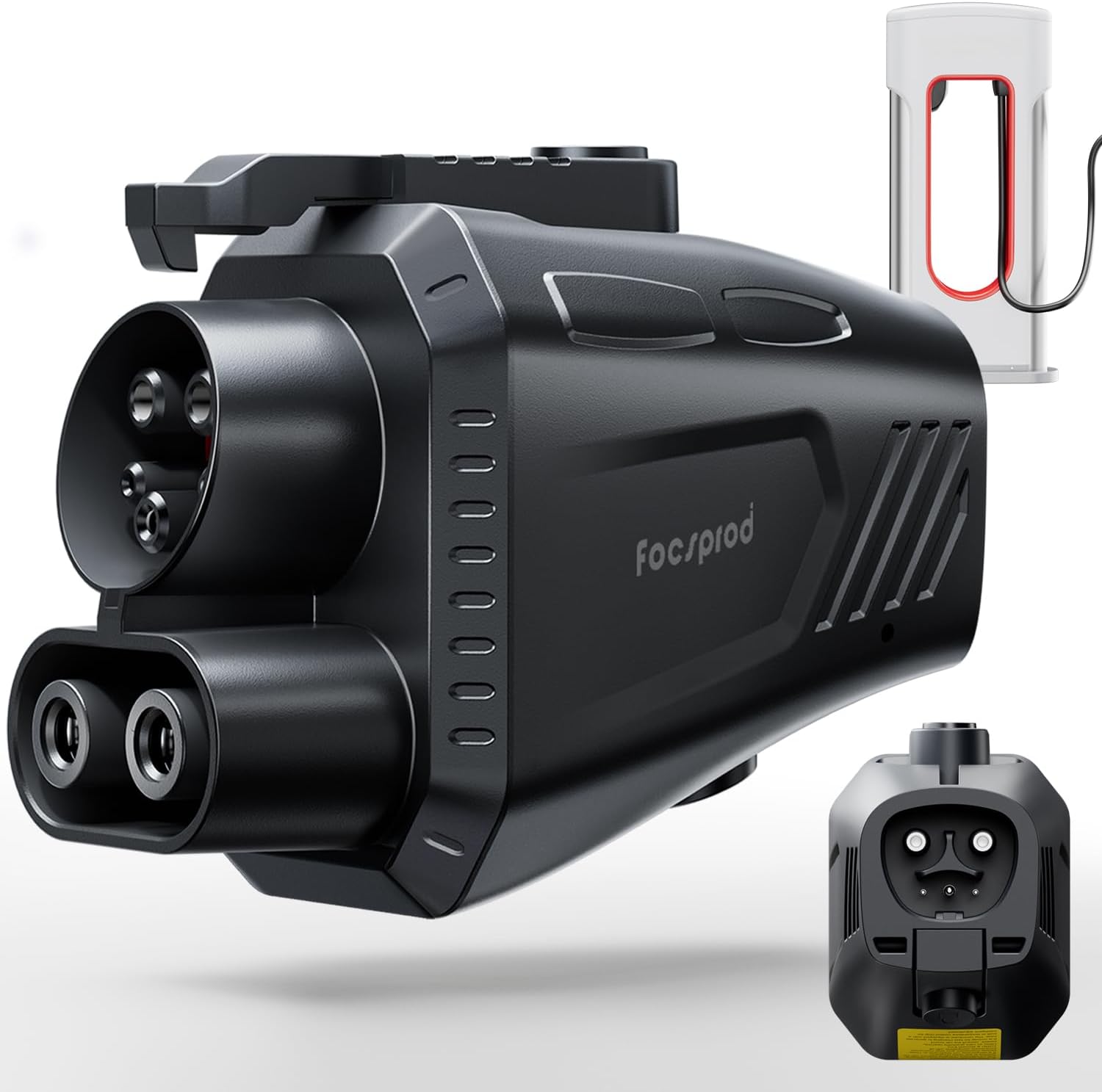
The Lectron Tesla to J1772 adapter is a practical accessory for any J1772 electric vehicle owner who wants to tap into the extensive Tesla charging network. This compact adapter converts Tesla's NACS connector to the standard J1772 plug, allowing you to use Tesla wall connectors, destination chargers, and mobile connectors at home, at RV parks, at hotels, or on the road. It's a smart addition for road trippers, RV owners, van lifers, and anyone who frequently travels to areas where Tesla chargers are more common than public J1772 stations.
With a maximum rating of 48 amps at 240 volts, this adapter can deliver up to 11 kW of charging power, which is enough to significantly reduce charging time compared to a standard Level 1 charger. The adapter is built to be portable: it weighs just over a pound and fits easily in a glove box or trunk. The IP54 weather-resistant rating means it can handle light rain and dust, making it suitable for outdoor use at campgrounds or during emergency roadside charging. The housing is made of durable materials, and the connector feels solid when plugged in.
Setup is straightforward: you insert the adapter into the Tesla connector until it clicks, then plug into your J1772 vehicle. Some users have noted that certain Tesla destination chargers or EV models may require a specific sequence to start charging, such as turning the car on after plugging in. The product description and user reviews suggest that with a bit of practice, most people get it working reliably. It's important to ensure the adapter is fully seated to avoid connection issues.
In terms of performance, the adapter supports fast charging, but it's worth noting that the actual charging speed depends on the Tesla charger's output and your vehicle's onboard charger. The adapter itself is rated for 48A, and many users report charging at 9.6 kW or higher with compatible hardware. The adapter includes built-in overheating protection, and while it may feel warm during use, this is normal according to the manufacturer. Some users have reported intermittent charging pauses on older chargers, which may be due to handshake compatibility issues rather than a defect in the adapter.
For RV owners and campers, this adapter is a game-changer. Many RV parks and campgrounds now have Tesla destination chargers, and this adapter allows you to use them without needing a Tesla-specific vehicle. It's also useful for emergency preppers who want to have more charging options during power outages or road trips. The compact size means you can keep it in your vehicle at all times without taking up much space. Homeowners with a Tesla wall connector can also use this adapter to charge a second non-Tesla EV, making it a versatile addition to any garage.
Overall, the Lectron Tesla to J1772 adapter is a reliable and affordable solution for expanding your charging options. It's not without its quirks, particularly with some older chargers or specific EV models, but the overwhelming majority of user feedback is positive. If you own a J1772 EV and want to access the convenience of Tesla chargers during your travels, this adapter is a worthwhile investment. Just be sure to check compatibility with your specific vehicle and charger type before purchasing.
Frequently Asked Questions
What factors determine the total volvo home charging station cost for a home setup?
Hardware selection, electrical panel capacity, and wiring distance determine the total expense. Purchasing a certified 40-amp Level 2 charging station represents only part of your investment. If your home garage requires a new 50-amp circuit breaker or subpanel upgrade, electrician labor adds to the final total. Using off-peak utility rates helps recover equipment costs over time.
Does a 40-amp Level 2 EV charger need a 50-amp breaker?
Yes, the National Electrical Code requires a 50-amp breaker for continuous 40-amp charging loads. Electrical codes state that continuous loads must not exceed 80 percent of a circuit rating. Running a 40-amp station on a 40-amp breaker causes nuisance tripping and creates fire hazards. Always verify that your dedicated 240-volt circuit matches continuous draw requirements.
Can J1772 electric vehicles use Tesla destination chargers?
Yes, a compact adapter like the Lectron Tesla to J1772 EV Charging Adapter lets J1772 vehicles connect to Tesla wall units and destination stations. This accessory supports up to 48 amps at 240 volts for convenient Level 2 charging. It does not work on Tesla DC fast Superchargers. Carrying an adapter provides helpful charging redundancy away from home.
Is a NEMA 14-50 plug-in station better than a hardwired unit?
Plug-in stations offer easy mobility, while hardwired units allow higher continuous power. A NEMA 14-50 plug delivers up to 40 amps and unplugs easily for road trips or relocation. Hardwired units support up to 48 amps on a 60-amp breaker for slightly faster recovery. For most daily driving needs, a 40-amp plug-in station delivers plenty of speed.
What should you do if your auxiliary battery fails unexpectedly?
A portable jump box or basic maintenance steps can restore auxiliary power when you cannot reach a wall charger. Knowing how to charge a car battery without a charger safely helps resolve unexpected 12-volt starting failures in emergency situations. Keeping a portable Level 1 or Level 2 cable in your vehicle also ensures you can plug into any standard outlet if necessary.




Write Your Review
No reviews yet. Be the first to share your experience!