

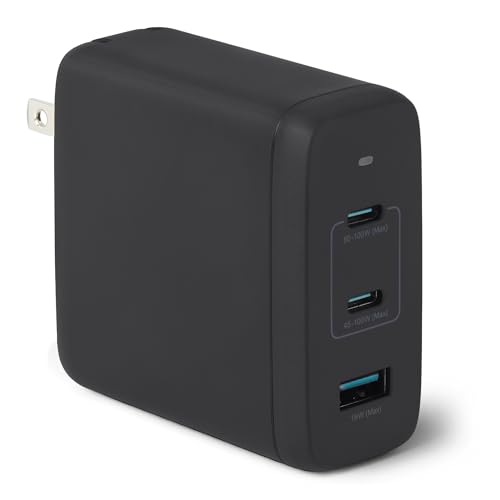
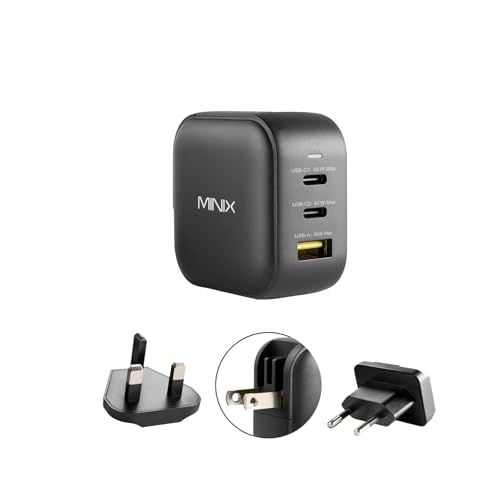
Bulky power bricks often crowd neighboring duplex wall sockets or slip loose from worn airport outlets, leaving your phone drained right before boarding. Evaluating a wall charger vs travel charger comes down to balancing raw stationary output against compact mobility. High-density GaN fast chargers pack serious power into pocket-sized shells, but deciding between a dedicated domestic wall block and an international adapter depends on your gear lineup. Some power bricks prioritize pure multi-device wattage for laptops, while travel plugs focus on folding prongs, interchangeable world pins, and wide voltage tolerances. Pairing your wall block with a dedicated portable charger for travel keeps your mobile gear covered when wall outlets are out of reach.
Careful analysis of manufacturer electrical specifications, charging protocols, and user feedback reveals distinct design trade-offs across both categories. Standard home wall units frequently deliver higher continuous single-port wattage for laptops through advanced USB-C Power Delivery and PPS standards. In contrast, multi-country travel adapters emphasize universal socket compatibility and integrated fuse protection over extreme laptop wattage. Selecting the right charging block prevents excessive heat buildup, stops mid-charge renegotiation drops, and eliminates the hassle of carrying separate bulky OEM adapters everywhere you go.




Frequently Asked Questions
What is the difference between a wall charger and a travel charger?
A standard wall charger focuses on maximum wattage and heat dissipation for home or office outlets, while a travel charger prioritizes compact mobility and international socket compatibility. Wall units often utilize GaN technology to power laptops and phones from a single plug. Travel adapters emphasize folding prongs, interchangeable world pins, and wide 100-240V voltage support.
Can a high-wattage USB-C wall charger damage low-power devices?
No, high-wattage USB-C Power Delivery chargers will not harm lower-draw accessories like smartwatches or earbuds. Connected devices actively regulate power draw by communicating their exact voltage needs to the charger via digital handshakes. For curious buyers, understanding how many volts a phone charger delivers clarifies how modern adapters step down output safely.
Do international travel plug adapters convert voltage?
Most travel plug adapters only convert physical pin shapes and do not alter electrical voltage. Connecting a 120V-only appliance to a 230V foreign socket through a mechanical adapter can cause severe electrical damage. Modern USB-C GaN power bricks, however, feature internal transformers that automatically accept 100-240V input worldwide.
Why does charging disconnect briefly when plugging in a second device?
Multi-port chargers momentarily pause charging to recalculate dynamic power distribution across all connected ports. When you plug in a secondary phone or tablet, the internal chipset resets current allocation to prevent overcurrent issues. Charging resumes within two seconds at the newly balanced wattage profiles.
Are folding prongs more practical than detachable travel plug adapters?
Folding prongs work best for daily commuting and domestic travel by protecting bag linings from bent pins. Detachable or modular adapters suit international trips where wall outlet styles vary across borders. When packing your gear for long flights, how to wrap a mac charger safely helps prevent cable strain and connector damage inside luggage.


Write Your Review
No reviews yet. Be the first to share your experience!