

Reliable Off-Grid Power Solutions
Outlet shortages and sudden battery drain can easily leave you stranded when working remotely or setting up camp. Having the best solar charging station on hand solves that problem by turning raw sunlight into steady electricity for your essential electronics. Based on our detailed comparison of port allocations, continuous wattage ratings, and user feedback, picking a unit with pure sine wave output and intelligent battery management safeguards sensitive laptops and gear. Matching battery capacity to your daily power draw prevents frustrating downtime in the field.
Sorting through dynamic port splitting and varying solar input wattage can quickly become confusing for outdoor travelers. Modern power stations combine fast-charging USB-C Power Delivery ports alongside standard AC outlets, ensuring you can run drones or laptops without sacrificing phone top-ups. If you frequently travel by road, pairing your solar generator with a best portable charger for car creates a versatile charging setup. Balancing watt-hour capacity, peak surge limits, and overall carrying weight ensures your electronics stay powered anywhere without added bulk.
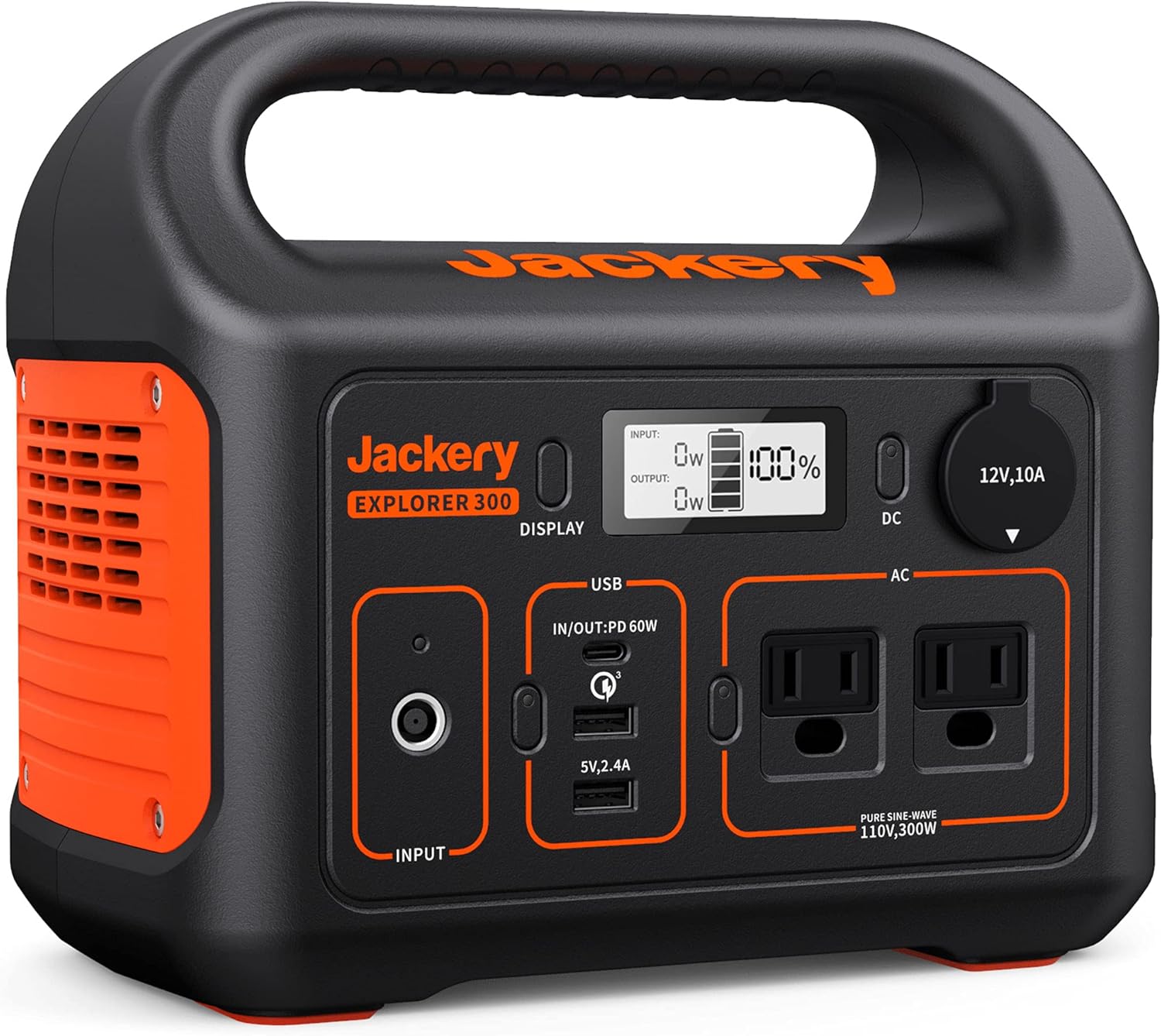
Pros
- Compact and lightweight design (7.1 lbs) makes it easy to carry to campsites, cabins, or roadside emergencies.
- Fast AC recharging (2 hours to 80%) and versatile solar input for sustainable off-grid power.
- Multiple ports including USB-C PD 60W and Quick Charge 3.0 to quickly charge modern devices.
- Reliable performance for CPAP machines, mini fridges, and small electronics based on user feedback.
Cons
- 293Wh capacity may not run high-wattage appliances like space heaters or full-size refrigerators.
- Limited to 300W continuous output; some tire inflators may not work at high battery charge due to safety cutoff.
- No built-in flashlight or app control found on higher-end models, and LiFePO4 battery not available in this version.
If you have been searching for a portable power station that balances size, weight, and capability, the Jackery Explorer 300 is a top contender. This compact unit packs a 293Wh lithium-ion battery and a 300W pure sine wave inverter into a 7.1-pound package that can easily fit in a backpack or under an RV seat. It is designed for campers, RV owners, road trippers, emergency preppers, tailgaters, and anyone who needs reliable portable power without noise or fumes.
Based on product specifications and user feedback, the Explorer 300 excels at keeping essential devices running. It can power a CPAP machine for a full night (around 8 hours using 51% capacity), charge a smartphone 15-20 times, or run a 60W mini fridge for about 4 hours. The two pure sine wave AC outlets deliver clean power safe for laptops, cameras, and medical equipment. In addition, there is a USB-C PD 60W port for fast laptop charging, a Quick Charge 3.0 USB-A port, a standard USB-A port, and a 12V car port. This variety makes it easy to charge up to six devices at once.
Recharging is straightforward and fast. Using the included AC wall adapter, you can reach 80% in about 2 hours and a full charge in roughly 4 hours. For off-grid adventures, plugging in a Jackery SolarSaga 100W solar panel (sold separately) fully recharges the station in about 5.5 hours thanks to the built-in MPPT controller. You can also charge from a car outlet during a road trip. The pass-through charging feature allows you to power devices while the station itself is recharging, which is handy during a power outage or at a campsite.
The build quality reflects Jackery's reputation. The rugged plastic housing has no sharp corners, and the unit feels solid. It operates silently and produces zero emissions, so you can use it inside a tent, RV, or cabin without worry. The LED display clearly shows remaining battery percentage, input/output wattage, and other status indicators. The battery management system (BMS) protects against overvoltage, short circuits, and temperature extremes, adding peace of mind. Jackery backs the Explorer 300 with a 2-year warranty, extendable to 3 years with registration.
One realistic limitation is that the 293Wh capacity and 300W output cannot handle high-wattage appliances like space heaters, hair dryers, or large refrigerators. Some users also note that the unit may not start a 12V tire inflator when the battery charge is above 50% due to a safety feature. Additionally, this model uses lithium-ion batteries rather than the newer LiFePO4 chemistry found in some competitors, so cycle life is slightly lower. Despite these points, many users find the Explorer 300 more than adequate for weekend camping trips, emergency backup, and daily portable use.
Overall, the Jackery Explorer 300 is a practical choice for anyone who needs a lightweight, quiet, and versatile power source. Campers will appreciate its portability and solar compatibility; preppers will value its quick AC recharge and silent operation during blackouts; road trippers can keep devices charged while driving. For small to medium power needs, this station delivers reliable performance without breaking the bank. If your power demands are modest and you prioritize portability, the Explorer 300 is well worth considering for your next outdoor adventure or emergency kit.

Pros
- Lightweight and portable at 5 pounds, easy to carry.
- Pure sine wave inverter provides clean power for sensitive electronics.
- Includes a 60W solar panel for renewable charging.
- Multiple charging options: AC, car, and solar.
- Affordable price for a complete solar generator kit.
Cons
- Solar panel charging is relatively slow; may not fully recharge the battery in low light.
- No USB-C PD port; requires adapter for newer laptops.
- Some users report reliability issues with the display or internal components.
The ZeroKor R200 is a portable solar generator that combines a 280Wh lithium-ion battery pack with a 300W pure sine wave inverter and a foldable 60W monocrystalline solar panel. This compact power station is designed for campers, RV owners, road trippers, emergency preppers, and anyone who needs reliable off-grid electricity for small electronics. With its lightweight 5-pound build and multiple output ports, it offers a convenient solution for charging smartphones, tablets, laptops, mini projectors, CPAP machines, and other low-wattage devices during weekend camping trips, tailgate parties, or power outages.
Based on product specifications and user feedback, the 280Wh capacity can charge a typical smartphone about 15 times or power a 40W mini fridge for roughly 7 hours. The 300W continuous output (600W surge) is sufficient for most small appliances, but users should avoid running high-wattage devices like hair dryers or coffee makers. The included 60W solar panel uses an MPPT charge controller to optimize charging, though real-world solar recharge times can vary from 4-8 hours depending on sunlight conditions. Wall charging via the included AC adapter takes about 5-6 hours, and car charging is also supported.
Portability is a standout feature: the power station measures 8.5 x 6.7 x 4.1 inches and weighs just over 5 pounds, making it easy to toss in a backpack or stow under an RV seat. The orange-and-black design includes a built-in LED flashlight with reading and SOS modes, adding utility for nighttime camping or emergencies. The housing is made of ABS plastic with a rugged feel, and the battery management system (BMS) provides protection against overvoltage, short circuits, and overheating. A cooling fan activates automatically during heavy loads or high temperatures.
In terms of connectivity, the R200 offers two 110V AC outlets (300W max), three 5V/3A USB-A ports, one quick-charge USB-A port (9V/2A), and one 12V DC port (10A max). Notably, there is no USB-C PD port, which may be a drawback for users with newer laptops that rely on USB-C charging. The solar panel itself includes USB-A and USB-C outputs for direct device charging, but the junction box is not waterproof, so care is needed in wet conditions.
Some realistic limitations emerge from user reviews. The solar panel, while functional, is not the fastest charger and may only provide a trickle charge under partial sun. A few users experienced display or internal failures, though the seller's responsive customer service often resolved issues quickly. Additionally, the 280Wh capacity is best suited for light to moderate use; running a Starlink terminal or similar power-hungry device will drain the battery in a few hours. For extended off-grid stays, a larger capacity unit or additional solar panels would be more appropriate.
Overall, the ZeroKor R200 is a solid entry-level portable solar generator that offers good value for its price. It works well for weekend campers, RVers who need to top off devices, and homeowners preparing for short power outages. While not a heavy-duty solution, its combination of portability, pure sine wave output, and included solar panel makes it a practical choice for those starting their off-grid journey or seeking a lightweight backup power source. If you prioritize compact size and affordability over high capacity, this setup is worth considering.
The ZeroKor R200 comes with a 60W foldable monocrystalline solar panel that features a high conversion efficiency of 20.5%. The panel includes a USB-A output (5V/3A, 9V/2A, 12V/1.5A) and a USB-C output (5V/3A, 9V/2A, 12V/1.5A, 15V/2A max) for direct charging of small devices, plus a DC interface (18V/3.3A, 60W max) to connect to the power station. The built-in MPPT charge controller in the power station optimizes the solar input for faster charging. Under direct sunlight, the panel can deliver around 40-55W, fully recharging the 280Wh battery in approximately 5-7 hours. In partial sun or cloudy conditions, charging times increase significantly. The panel is lightweight and folds for easy transport, but the junction box is not waterproof, so it should be kept dry during use. For best results, position the panel at a 30-45 degree angle facing the sun and avoid shading.
Frequently Asked Questions
Can a Best Solar Charging Station power high-wattage kitchen appliances?
No, compact stations with 300W continuous output cannot run appliances like coffee makers, microwaves, or hair dryers. These units are built specifically for lower-draw electronics such as laptops, smartphones, cameras, and CPAP machines. Drawing more than the rated continuous wattage triggers the built-in overload protection to prevent hardware damage.
How fast does a solar panel recharge the power station?
Recharging usually takes between 4 and 8 hours under direct sunlight with a compatible 60W or 100W panel. Modern units feature integrated MPPT charge controllers that track the optimal voltage point to speed up solar harvesting. Inconsistent sunlight, heavy cloud cover, or poor panel angles will decrease solar efficiency and extend recharge times.
Is pass-through charging safe for the battery in 2026?
Yes, pass-through charging is safe on stations equipped with an advanced battery management system. The internal circuitry regulates heat and power distribution between solar input and connected devices. However, if your devices consume more electricity than the solar panels generate, the battery will discharge to bridge the energy deficit.
Why is a pure sine wave inverter essential?
Pure sine wave power replicates clean electrical current identical to home wall outlets. This clean alternating current prevents overheating, audio buzzing, and system glitches in sensitive microprocessors found in laptops and medical equipment. Inverters with modified sine waves can cause excess heat or component strain in delicate hardware.
How does a solar generator compare to a compact travel charger?
Solar stations provide high-capacity battery reserves above 280Wh alongside AC outlets and multiple DC outputs. While many flyers carry a dedicated best portable charger for travel for quick handheld top-ups, a solar power station provides sustainable, multi-device off-grid electricity during outdoor trips or home power outages.
How should you store a portable power station when not in use?
Keep the battery level between 60% and 80% when storing the unit for several months. Leaving a lithium-ion pack completely depleted can trigger a low-voltage protection lockout that prevents standard recharging. Storing the unit in a dry room at moderate temperatures helps maintain cell life over time.



Write Your Review
No reviews yet. Be the first to share your experience!