

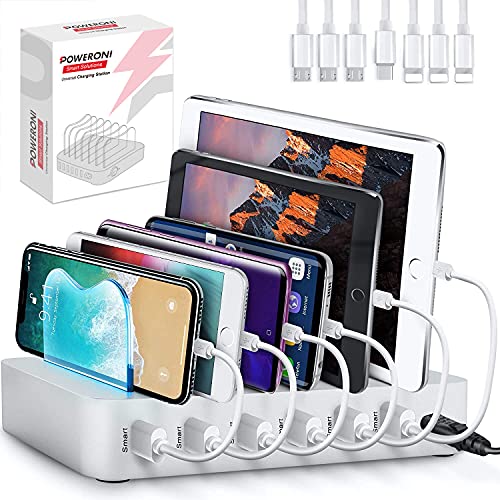
Tangled cords across a work surface create daily headaches, especially when family members compete for the same two wall outlets. Modern households juggle multiple power-hungry tablets, work laptops, and cellular devices that demand steady wattage without overheating. Evaluating power specifications and dynamic wattage distribution helps narrow down the best charging station for multiple devices wirecutter options that truly streamline your charging counter. Knowing how power flows matters too, especially if you wonder how many volts in a phone charger are needed to fast-charge gear without damaging sensitive electronics. Quality hubs eliminate bulky adapter bricks while delivering dedicated USB-C Power Delivery to keep workflow moving smoothly.
Cluttered desks often lead to frayed cables and accidental drops, creating unnecessary hardware wear over time. If you often manage long laptop cables alongside shorter phone cords, learning how to wrap a Mac charger helps preserve connector lifespan when setting up a centralized power station. Manufacturer spec sheets show that top multi-device organizers now integrate flame-retardant ABS enclosures, smart safety chips, and case-friendly divider slots that accommodate hefty tablet cases. Investing in a reliable dock with simultaneous multi-port charging keeps nightstands neat and protects expensive battery health all day long.


FAQs
Can a single multi-device charging station power a laptop and smartphones simultaneously?
Yes, high-wattage hubs with independent USB-C Power Delivery ports can run a laptop alongside mobile gadgets without power drops. Look for models offering 65W to 120W dedicated output on primary Type-C ports so your notebook receives sufficient current while smaller items charge.
How does dynamic power distribution work across multi-port charging hubs?
Internal smart chips automatically detect each connected device to allocate proper amperage and prevent circuit overloads. Rather than splitting total wattage evenly, the station negotiates voltage profiles based on each gadget’s maximum intake rate.
Do high-wattage multi-device charging docks harm smartphone battery health?
No, modern smartphones draw only the wattage their internal battery management controllers request. Built-in overcharge, overcurrent, and thermal protections prevent excess electricity from reaching your device. Pairing your hub with quality cords is just as crucial as choosing the best portable chargers for iPhone 14 or Android handsets.
What makes Gallium Nitride (GaN) chargers better for crowded desks?
GaN semiconductors conduct electricity much more efficiently than traditional silicon components, generating significantly less heat. This thermal advantage allows manufacturers to build higher-wattage multi-port hubs in noticeably smaller enclosures. As a result, you get cooler operating temperatures and a compact footprint that fits neatly on tight desks.
Are desktop charging stations practical to pack for family vacations?
Yes, multi-port charging docks eliminate the need to carry separate wall adapters for every tablet, watch, and phone. While slightly bulkier than a standalone pocket power bank, a desktop dock serves as a centralized hub in hotel rooms. Travelers who prioritize mobility often pair these stations with options from our best portable charger for travel guide for on-the-go power.
How do integrated dividers compare to removable plastic slots on charging docks?
One-piece integrated slots offer far greater durability because solid ABS partitions cannot wobble, snap, or detach under heavy tablet weight. Removable plastic dividers frequently loosen over time, risking device spills on hard floors. Choosing docks with fixed, wide bays ensures stability even when holding thick childproof tablet cases.




Write Your Review
No reviews yet. Be the first to share your experience!