

A portable power station can disappoint if its watt-hours look generous but its output or ports don’t match the devices you need to run. The Pecron F1000lfp Portable Power Station 1500w 960wh phrase points to a 1500W, 960Wh Pecron model, but the product listings below describe other stations, so check each listing carefully rather than assuming those specifications apply to every option. Capacity in watt-hours and continuous output in watts answer different questions: stored energy and the load the unit can support. Based on supplied specifications and manufacturer descriptions, the roundup includes compact choices and higher-capacity units, with differences in weight, outlets, and charging options. For another charging-related reference, see this Bluetti power station charging accessory.
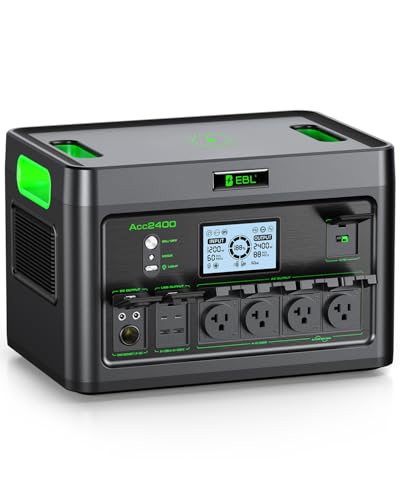
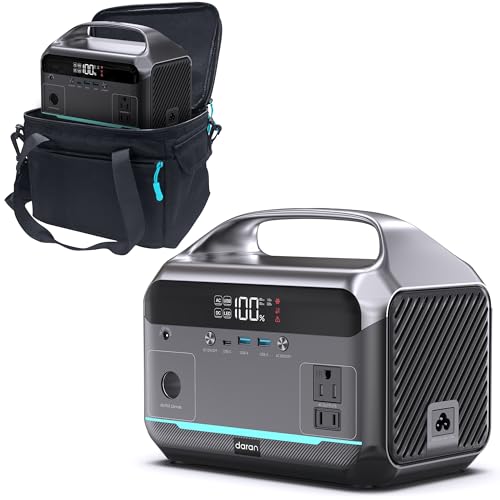
For camping, RV travel, remote work, or outage preparation, start with the devices you actually expect to power and their rated wattage. A station’s capacity alone doesn’t establish runtime, and a listed peak output isn’t the same as continuous output. The Jackery Explorer 1000 v2 lists 1,070Wh and 1,500W AC output, while the EBL unit lists 1,843.2Wh and 2,400W output; both are notably different from the compact 288Wh BLUETTI and DARAN options. Weight may matter just as much: the supplied descriptions list the EBL at 55 pounds and the DARAN at 8.2 pounds. Check port details, charging inputs, panel compatibility, and any load limits in the individual listing before buying.
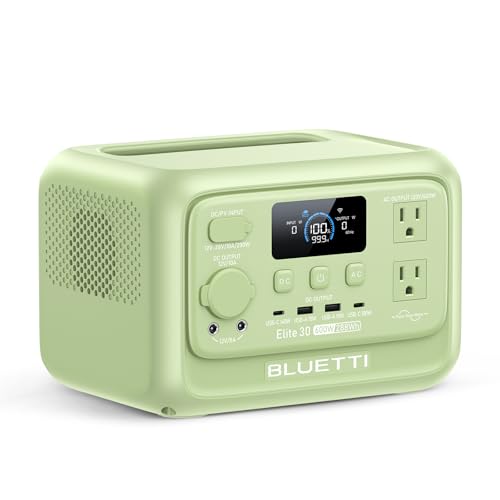

Pros
- Extremely fast wall charging compared to similar capacity units.
- Safe, long-lasting LiFePO4 chemistry with built-in BMS protection.
- Quiet operation with no fumes, suitable for indoor emergency backup.
- Compact size and integrated handle for easy transport and storage.
Cons
- Solar panels sold separately, adding to overall cost.
- App required for 1-hour fast charging; default is 1.7 hours.
- Limited to 1500W continuous output, may not run high-draw appliances like large heaters.
The Jackery Explorer 1000 v2 is a portable power station designed to deliver reliable, silent electricity for camping, RV trips, emergency preparedness, and off-grid living. With a 1070Wh LiFePO4 battery and a 1500W pure sine wave inverter (3000W surge), it can power essentials like mini-fridges, CPAP machines, lights, laptops, and small appliances. Its compact size and 23.8-pound weight make it one of the most portable options in its class, and the foldable handle adds convenience for loading into a vehicle or carrying to a tailgate.
This unit is best suited for campers, RV owners, van lifers, tailgaters, and homeowners preparing for power outages. Remote workers who need backup for laptops and monitors will also appreciate the 100W USB-C PD port and three AC outlets. The LiFePO4 battery chemistry provides over 4,000 charge cycles to 70% capacity, translating to a lifespan exceeding 10 years with normal use. According to product specifications, the built-in Battery Management System (BMS) protects against overcurrent, short circuits, and temperature extremes, ensuring safe operation indoors or out.
Performance-wise, the Explorer 1000 v2 stands out for its charging speed. With the Jackery app, you can activate emergency charging and go from 0% to 100% in about one hour. The default mode charges in 1.7 hours, which still beats many competitors. Solar charging is supported (panels not included) via a separate input, making it a viable companion for extended off-grid trips. The unit includes three 120V AC outlets, one USB-A (18W), two USB-C (30W and 100W), and a 12V car port, offering plenty of flexibility for charging phones, tablets, cameras, and small electronics simultaneously.
Build quality is solid with a plastic housing that feels durable enough for campsite use. The front panel features a clear LED display showing remaining battery percentage, input/output wattage, and estimated runtime. The fan is quiet during normal operation, though it may ramp up under heavy loads. The unit operates in temperatures from 14°F to 113°F, making it suitable for most American climates. Storage is straightforward: keep it in a dry place, and recharge every few months to maintain battery health.
Realistic limitations include the need to purchase solar panels separately for off-grid recharging, and the 1500W continuous output may not support high-wattage appliances like space heaters or large air conditioners. The app is required to enable the fastest charging mode, which some users may find inconvenient. Additionally, while the weight is manageable, it's not designed for backpacking; it's best for car camping, RV storage, or home emergency kits.
Overall, the Jackery Explorer 1000 v2 offers an excellent balance of capacity, portability, and charging speed for outdoor enthusiasts and emergency preppers. Its long battery life and safe LiFePO4 chemistry make it a trustworthy power source for weekend camping trips, hurricane season backup, or daily use in a van or RV. For anyone seeking a reliable portable power station without the noise and fumes of a gas generator, this is a strong recommendation.

Questions to Check Before Buying
Does 960Wh tell me how long a power station will run my devices?
No, watt-hours describe stored energy, not a guaranteed runtime. Actual use depends on device draw and conversion losses, so compare the load with the station’s stated capacity and output before relying on it for camping or outage backup.
Can these stations power a refrigerator during an outage?
It depends on the refrigerator’s running and startup demands, which aren’t provided here. Compare those requirements with the station’s continuous output and surge rating, and don’t assume capacity alone confirms appliance compatibility or an expected runtime.
Which listed option is easier to carry for camping?
The supplied descriptions list the DARAN at 8.2 pounds, the BLUETTI at 9.4 pounds, and the Jackery at 23.8 pounds. Those weights help compare portability, but check dimensions, handles, and your intended load before choosing a camping power station.
Can I recharge a station from a solar panel or vehicle?
Some listed options describe solar or vehicle charging, but compatibility varies by model. The Jackery listing says it works only with Jackery solar panels; check input limits, panel requirements, and included cables, and see this Jackery charging accessory overview for related charging context.
Can a power station run several devices at once?
Yes, if the combined load stays within the unit’s supported output and the needed ports are available. The EBL listing describes 12-device charging, but verify individual port ratings and total output limits before connecting multiple appliances or electronics.


Write Your Review
No reviews yet. Be the first to share your experience!